Tuesday, October 20, 2009

A Chat with the Idaho Gardener

Mary Ann Newcomer, The Idaho Gardener


Here's a Little Confession: I was trained as a Master Gardener in Idaho, but as a newcomer to these growing conditions, I still have plenty to learn about gardening here. That's why I was delighted to chat with another Newcomer recently . . . Mary Ann Newcomer, to be exact.

Best known as The Idaho Gardener, Mary Ann is a third-generation Idahoan who really knows her state. Alongside her popular blog - http://www.idahogardener.com/ - she writes a monthly online gardening column for Mary Jane Butter's Farmgirl Connection Newsletter. She's also called "Dirt Diva" on Boise's River Radio Station (94.9 FM), where she dishes out gardening tips and humor regularly.

Mary Ann is a self-described "plant geek," who is trained as a Master Gardener and Advanced Master Gardener in Idaho. But she says her greatest accomplishments are the demonstration gardens she helped create for Idaho Botanical Garden. Here's what else she had to say during our chat.

Question: What demonstration gardens are you helping create at Idaho Botanical Garden?

Answer: In the late 1990s, I had the pleasure of overseeing the installation of the Contemporary English Garden. Boise's growing conditions are very different from England's. So, it was an interesting challenge to research and select plant varieties, which provided the look and feel of an English garden, yet were better suited to our arid climate.

The last few seasons, I've worked with Ann DeBolt and Tim Zofran from the Idaho Botanical Garden to create the Lewis and Clark demonstration garden. It's a gorgeous garden, if I do say so myself. Here we're using Idaho native plants and their cousins to show how these low-maintenance plants can be combined to create sustainable, colorful gardens in the home.

Question: As a third-generation Idahoan, what common gardening mistakes do you often see newcomers make?

Answer: People new to this area often want to plant their sentimental favorities, like rhodies, fuschias, aspen and weeping white birch. Sadly, this arid climate with its intense light and alkaline soil conditions are not always what they are used to in their gardens.

Question: What makes gardening in Boise challenging? What makes it rewarding?

Answer: A lack of water and lean soils are some of the biggest challenges we face in Boise. Creating lush-looking gardens in spite of the high desert environment is my biggest reward.

Fortunately, we're located in Idaho's banana belt. (Boise is UDSA Hardiness Zone 6.) So, our winters aren't as severe as in other areas of the state. Also, we can grow wonderful fruit trees in our valley. I've espaliered apple and pear trees in my garden, which provide delicious fruit in the fall.

Question: What are some of the biggest surprises people tend to have about gardening in Boise?

Answer: Well, the main surprises are often the negative ones. For example, pastels don't work well here, unless you live in the older parts of the town where there are more trees. In the foothills and open valleys, our bright harsh light calls for more bold colors in the garden. We have such low humidity, it causes great stress on plants not acclimated to this region.

Question: What's the best advice for starting a garden in Idaho?

Answer: Get a soil test. No really, I mean it. Learn how to work with the Idaho environment, not against it. That's the best way to create a stunning garden here. Know the lay of the land.

Question: Anything else you'd like to add?

Answer: Even if you don't like playing in the dirt, Boise still offers plenty of ways to get outside. Hang out at the Idaho Botanical Garden and listen to live music in the summer, or experience the garden decorated with thousands of lights in the dead of winter. Check out our city parks too. They are truly some of Idaho's gems.

Learn More:
Mary Ann's blog - http://www.idahogardener.com/
Mary Ann on Twitter - @idahogardener
Idaho Botanical Garden - http://www.idahobotanicalgarden.org/

Tuesday, October 6, 2009

Going Native - North Carolina Style


The North Carolina Botanical Garden in Chapel Hill knows plenty about going native. In fact, this 600-acre botanical garden is all about helping the public better understand and appreciate native plants. As you can see from the praying mantis above, the beneficial insects feel quite at home here too.

The conservation garden is affiliated with the University of North Carolina at Chapel Hill, and features 2,500 of the 4,700 native or naturalized plant species known to grow in North and South Carolina. Not to mention herbs and other plants from around the globe.

Recently, I had the good fortune to see several of these native plants myself during the Garden Writers Association 2009 symposium.


The garden's trails travel through various natural habitats. Above Coreopsis gladiata (aka coastal plain tickseed) mingles beautifully with Euonymus americanus to create a stunning late-September scene.


Euonymus americanus can be found in forests throughout the southeastern United States. Other names for this pretty perennial include 'strawberry bush' and 'hearts-bustin'-with-love.' Incidentally, I called upon Helen Yoest of Gardening with Confidence for help in identifying this eyecatching plant.


One of my personal favorites was the American beautyberry (Callicarpa americana), which has the most luscious purple berries. The long-lasting berries are an important food source for many birds, as well as foxes, racoons and white-tailed deer. I particularly liked the way the shrub was pruned to grow up this trellace by the lily pond, which is home to colorful Koi fish. It's a great example of how native plants can fit easily into different home garden settings.


More than 40 pieces of sculptures by 24 artists are scattered around as part of the garden's 21st annual Sculpture in the Garden exhibit, on display until Nov. 15.  This spiral sculpture is named "Mandala of the Earth and Sky," and was created by Frank Holder.


Watch out bugs! This pitcherplant has tubular leaves that snatch up insects, making it a very effective bug catcher as well as a lovely addition to your garden. You'll find plenty of unusual plants here. In fact, the North Carolina Botanical Garden has one of the best carnivorous plant collections in the Southeast.


Nestled among the rare plants are a number of stunning cacti, which just happened to be blooming during our visit. Aren't those flowers a heavenly pink?


Sculptures. Native and rare plants. Well-shaded walking trails. The North Carolina Botanical Garden has a little something for everyone and it's definitely worth a visit. Best of all, it's open year round. So, if you're in the Raleigh-Durham area, take some time to go native. You'll be glad you did.

Learn more about the North Carolina Botanical Garden.

Wednesday, September 30, 2009

A Tour of Montrose Gardens

Reaching Montrose Gardens in Hillsborough, North Carolina is a pleasant affair. The scenic road into these nationally-known gardens (now part of The Garden Conservancy) passes by charming cafés, elegant shops and art galleries, not to mention 19th century homes perched majestically on lush green lawns.

The picturesque setting is what one would expect from such a historically important place as Hillsborough. Established in 1754, the town was a hub of political activity during the colonial and revolutionary years. But for garden lovers, it’s probably best known as the home of Montrose Gardens.


I happened to find myself in this lovely spot during a recent Garden Writers Association symposium tour. Unfortunately, I was fighting a cold at the time, and it was the last tour on a chilly autumn day.


It wasn’t until I returned home that I found myself continually thinking of my time at Montrose Gardens. Once I looked over my pictures, I saw why these gardens have won the hearts of so many over the years.

Montrose Garden's famous landscapes originated in the 19th century, when the 61 acre property first belonged to Governor and Mrs. William Alexander Graham.


Nancy Goodwin – a noted plantswoman and author – is most responsible, however, for the national recognition garnered by the gardens.


Goodwin and her husband bought the property in 1977. The couple then greatly expanded the gardens, and began operating the Montrose Nursery on the site in 1984.


Before long, The New York Times called the nursery “one of the best small mail-order sources of rare and unusual plants in the country.”


Montrose Nursery was later closed in 1993, and the house added to the National Register of Historic Places in 2001.


Today, the gardens are open to the public by appointment only. This ensures future generations will have the chance to enjoy these lovely themed gardens for many years to come.


Learn more about Montrose Gardens.

Sunday, September 20, 2009

Harvest Time in the Garden

"In the garden, Autumn is, indeed the crowning glory of the year,
bringing us the fruition of months of thought and care and toil."
Rose G. Kingsley, The Autumn Garden, 1905

It's harvest time, a time when many gardens are loaded with late-season vegetables and fruit ripening to perfection. So, it seemed the right time to give you a quick tour of our kitchen garden this year.


Vegetables and flowers are close neighbors in my suburban garden. Above, 'Rosa Bianca' eggplants grow next to sages and other flowers and herbs.


'Rosa Bianca' is an Italian heirloom variety, which is prized by chefs because it rarely becomes bitter. We've grilled the eggplant with olive oil and herbs, as well as featured it in casseroles with feta cheese and other vegetables. This variety can take 70-85 days from transplanting to ripening, so start seeds inside in the spring and plant seedlings after the first frost.


'Fairy Tale' eggplant is a lovely variety of eggplant that really produces well in containers. As the variety only takes about 50 days to ripen, this eggplant is ideally suited for shorter growing seasons. We've sauteed them with olive oil and other vegetables for delicious side dishes.


'Packman' broccoli just keeps on giving. It starts with a single stalk early in the season. Once you harvest that central stalk the plant produces side stalks throughout the summer.


We planted broccoli seedlings in late-April and are still eating from these plants in late-September. If you look closely, you can see all the many side stalks developing into tasty vegetables for us to eat.


With more than 10 varieties of hot and sweet peppers around here, we've been drying them, grilling them, stuffing them, you name it... Above are some paprika, cayenne, hot Thai and jalapeno peppers just waiting to be picked. (Be sure to wash your hands, however, when you do. Hot peppers can burn your eyes if you aren't careful.)


Lipstick' sweet pepper is one of several pepper varieties we're growing, including 'Sweet Banana' and 'Giant Marconi.' With all this abundance, we're freezing peppers now so there will be plenty around for colder months.


Speaking of colder weather, earlier in the season we planted cool-season vegetables such as peas, radishes and beets. In the foreground are 'Forellenschuss' lettuces, which have become a family favorite. The speckled leaves of this delicious romaine-type lettuce are not only lovely, they also maintain their shape well and don't become limp and boring with salad dressings.


Once those cool-season vegetables were pulled out in the summer, we planted a bean teepee in one bed and sweet peppers in the other. Above is a photo taken last week. As you can see, with the right growing conditions, you can have beans later in the season than you may think.


The bean teepee is planted with 'Ideal Market' and 'Purple Pod' pole beans, which are starting to ripen now. The goal is to keep picking these vegetables as they ripen, so the plant keeps producing as long as possible.

But even as these warm-season vegetables ripen, the growing season is by no means over. There are still those cool-season vegetables to grow in fall, such as Brussels sprouts, kales, 'Tom Thumb' peas and more.

In other words, we may not yet be eating from our garden all year long, but we're working on it. Yep, we are definitely working on it...

Friday, September 18, 2009

Inside an Innovative Idaho Garden


Step onto this shady and serene back porch, and you might think you’d landed in Italy. Not Idaho.

A fountain bubbles in the background. ‘Niagara’ and ‘Suffolk’ red grapes hang from the pergula. Comfy chairs are scattered among green leafy plants, and the courtyard looks like it’s been there for generations.

That level of detail can be seen throughout this delightful suburban garden, which was designed and created by self-taught gardeners Kim and Victoria Williams of Boise, Idaho.

You may already know the Williams by their blog Our Life in Idaho. But what you might not know is that these two bloggers did all the work themselves in their quarter acre garden. Whether it was building various outdoor structures or collecting rocks to line the pond, the couple created a lovely garden with several themed areas.


Right off the Italian-inspired back porch is a small meditation garden with whimsical sculptures, grasses and sweet woodruff. A chair provides a quiet place to sit and drink a morning coffee.


In another area of the garden, a climbing 'White Dawn’ rose mingles with ‘Perle d’Azur’ clematis.


Birds of all types are welcome here. Cheerful shasta daises, Lychnis coronaria and 'Nicholas' daylilies add color and charm to a collection of birdhouses. In the background is a corkscrew willow (Salix matsudana).


The centerpiece of the garden is a large pond that meanders through the backyard. The pond is framed by an old tree stump, giant reed grass (Arundo donax), 'Black Lace' elderberry and calendula.

"The pond assembly only took a weekend," remembers Victoria. "Once we had collected all the rocks, the project went rather fast."


Colorful koi fish swim happily in the pond, surrounded by river rocks and a wooden deck built by the couple.


What looks like a pretty playhouse is actually a charming way to hide the pond's plumbing.

Thinking of building your own pond? The Williams offer these tips:

  • Make your pond bigger than you initially planned. It's hard to enlarge a pond later.
  • Attend several garden pond tours, so you can ask lots of questions.
  • Ask about filtration too. There are many options; you'll want one that works best for your size pond.


Every good garden needs a furry friend. Chelsea (pet dog extraordinare) Williams keeps watch in this yard.


From a shady porch in the back of the garden, the couple and their pup get a well-deserved rest.

If this garden hasn't impressed you enough, Victoria and Kim ripped out the turf in their front yard and planted a wildlife preserve that is only watered once a month during Idaho's hot summers. But that story will have to wait until another day.

Learn more about the Williams' experiences by visiting their blog at http://ourlifeinidaho.blogspot.com/.

Monday, August 24, 2009

Grocery Gardening -- Or Where I've Been Lately

"Deep summer is when laziness finds respectability," said renowned author and philosopher Sam Keen. But summer fun wasn't the reason why Seasonal Wisdom has been so neglected recently. There's a much better reason.


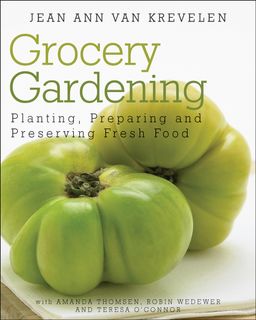
The story started on Twitter, believe it or not. That's where I was approached by social media maven Jean Ann Van Krevelen about co-authoring a book called "Grocery Gardening" to be published by Cool Springs Press. 

This isn't just any old gardening book either. What makes this book special is the fast turnaround (60 days) and the fact that the four authors have never before met. Technology tools like Twitter, Skype and Wiggio have enabled us to communicate and work effectively together.

So, who is doing what? Well, I'm reporting on nutritional facts, as well as the best ways to purchase quality fruit and vegetables. My talented colleagues are providing helpful gardening and preparing advice for a whole range of fruit, vegetables and herbs.

You probably recognize the other co-authors:
  • Jean Ann Van Krevelen (@jeanannvk on Twitter) wrote Growing Food: A Guide for Beginners and was named “2008 Top 50 Tweeple to Follow” on Twitter.
  • Amanda Thomsen (@kissmyaster on Twitter) writes a popular blog for Horticulture magazine
  • Robin Ripley (@robinripley on Twitter) is the national gardening columnist for Examiner.com

You can participate too!  "Grocery Gardening" is the industry's first crowd-sourced gardening guide. So, your comments are welcome too.

Contribute gardening tips, photos and recipes by participating in the Grocery Gardening community at http://grocerygardening.ning.com/. Who knows? Your ideas might just be featured in this book. But hurry! Time is running out. Preorder this book now.

Look for more stories to come.  California wildflowers and an innovative Idaho garden are just some of the topics coming in upcoming weeks. Hope to see you here again soon...

Tuesday, July 21, 2009

Six Tomatoes for Cooking and Preserving

'San Marzano' paste tomatoes about to ripen.
If you're craving delicious homemade tomato sauces, pastes, salsas or ketchup -- not to mention sun dried tomatoes -- look no further than the paste tomatoes.

Beefsteaks, grape and cherry tomato varieties taste delicious in salads and on sandwiches. But when it comes to cooking and preserving, the paste tomatoes are typically the ones to pick.

Paste tomatoes have meatier flesh, fewer seeds and less water than other types. As a result, these varieties create a thicker juice and require less time to cook down to a paste consistency.

Of the many delicious paste tomatoes available, here are six super ones to try:

'Roma' - When you say "sauce tomato," this is what most people hear. The popular heirloom is ideal for cooking and processing. Compact bush plants are prolific producers of 3 inch long fruit that tends to ripen all at once. (Determinate; 78 days)

'San Marzano' - In Italy, this heirloom is considered the premier variety for canning, tomato paste or puree. Bright red pear-shaped fruit has little juice and heavy, flavorful walls. Crack resistant, 2 to 3 inch tomatoes grow in clusters on productive plants. (Indeterminate; 80 days)

'Grandma Mary's Paste' - Besides having a terrific name, this old variety has delicious 3 inch red tomatoes, which are perfect for cooking or eating fresh. Plants are very prolific. (Indeterminate; 70 days)

'Purple Russian' - All season long, this tasty heirloom produces dark purple oval fruit, which has a meaty, rich flavor ideal for processing. Four inch plum-shaped tomatoes grow on disease resistant plants. (Indeterminate; 80 days)

'Principe Borghese' - This old Italian variety is famous for sun dried tomatoes. Red grape-shaped fruit is dry with few seeds, making it well suited for sauces too. Fruit grows in heavy clusters. (Determinate; 75 days)

'Jaune Flammee' - This prolific French heirloom is actually a globe tomato, not a paste. But the golden-yellow fruits with contrasting red interiors make lovely and delicious sun dried tomatoes. (Indeterminate; 70 to 90 days)

This story originally appeared as a guest post in The Practical Preserver.