Tuesday, January 12, 2010

Honest Scrap Award (Or, A Bit About Me)


If you've been following Seasonal Wisdom, you've probably noticed my stories tend to focus on other people. The fact is I'd rather write about other folks and their traditions than myself.

But this post is different. That's because Helen Yoest of Gardening with Confidence and Dan Eskelson of Clearwater Landscapes tagged me for the Honest Scrap Award. They're such nice people, how could I possibly refuse?

The Honest Scrap Award rules are simple. Tell 10 things about yourself. Then ask seven other bloggers to do the same. So, here goes...


A flower lover from way back...

  1. A bit of a gypsy, I've lived in cities as diverse as Boston, Orlando, Los Angeles and Washington D.C. Other places I've called "home" include Germany (a small village near the Austrian border); the Idaho foothills and more...
  2. All my travels have led me to appreciate the different ways people enjoy life, celebrate in the kitchen and have fun in the garden. Viva la difference!
  3. I wish I could be a specialist. I really do. But it wasn't my destiny. Over the years, I've written about everything from jewelry history and agricultural issues to intellectual property rights for organizations in the United States, Europe and Asia.
  4. So, what are my favorite topics? That's easy to answer - gardening, seasonal folklore, local foods and healthy living.
  5. Some people collect stamps. I collect seasonal traditions, folklore and superstitions that reveal interesting facts about the way we used to live. Sure, I love the latest trends, but it's the mix of the old with the new that inspires me most. Believe me: history is stranger than fiction.
  6. In warmer months, you'll find me in my "work-in-progress" garden. We grow lots of vegetables, herbs and flowers ... particularly the older, rarer varieties.
  7. To win my heart, it helps if the plant looks pretty, smells good, tastes delicious and plays well with others. Although I've been known to let a few slackers survive...
  8. Local foods are my passion. I'm blessed to live in a state with delicious pasture-raised animals like grass-fed beef, American Wagyu beef, lamb, bison and elk. As for produce, my first choices are always from local growers or my own backyard.
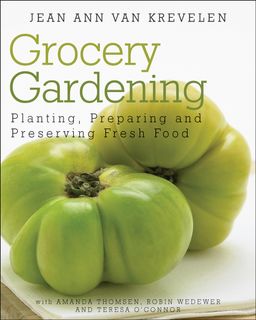
  9. Buying local foods is a topic I write about in Grocery Gardening (Cool Springs Press, 2010). You'll also find information about the nutritional benefits of eating vegetables, fruits and herbs, along with tips on planting, preparing and preserving fresh foods.
  10. Incidentally, none of the Grocery Gardening co-authors had ever met in person before working on this book. We first met on Twitter, and communicated mainly via Skype conference calls, e-mail and other technology tools.  Quite twenty-first century of us, don't you think?
So, now that I've shared a bit about me, I'm forwarding the baton to seven more bloggers. But no pressure to participate, please. It's just my way of drawing more attention to your wonderful blogs.

Monday, January 4, 2010

Make a Toast to Wassail


Spices often used for wassail, including allspice, nutmeg, cloves and cinnamon.
Image by The Gifted Photographer at Flickr.com

If there's a drink that deserves a toast this holiday season - and all winter, really - it's wassail. This steaming spiced concoction is often made with roasted apples; sugary spices; dark ale, wine, sherry or port; along with other warming ingredients.

"Wassail: a liquor made of apples, sugar, and ale;
a drunken bout; a merry song."
Samuel Johnson's Dictionary, 1756

The word wassail comes from the Anglo-Saxon toast waes hael (or something similiar), which means to "be well." And this drink has long been closely connected with good health.

Since the Middle Ages, wassail was served during the winter season, particularly at New Year's Eve and Twelfth Night (Jan. 6), so that folks could wish fine health to each other for the new year.

"Love and joy come to you,
And to you your wassail too,
And God bless you and
send you a happy New Year."
The Wassail Song

Make a Toast: Wassail is now a big part of our culture, without us even knowing it. For example, the expression "to make a toast" comes from the toasted bread often served on top of the wassail bowl.

"It was likewise the custom... for the master of the house
to fill a large bowl ... and drink of it first himself,
and then give it to him that sat next, and so it went around."
Gentleman's Magazine, 1784
 
Bless the Trees: Among the strangest customs was the apple wassail, which dates back to the 16th century. Around Twelfth Night (Jan. 6), English farmers brought wooden wassail bowls to their apple orchards for an annual celebration.

The farmers blessed the fruit trees by drinking to their health. They also put pieces of toast around their roots or hung the toast from the branches. Why? To ensure a good harvest in the coming year. The arcane ritual still takes place in parts of England today.

"Old apple tree, we wassail thee, and hoping thou wilt bear
For the Lord doth know, where we shall be, till apples come another year
To bear well and bloom well, so merry let us be
Let every man take off his hat and shout to the old apple tree."
Apple Tree Wassail, North Somerset, England

Recipe: There are many different recipes for wassail. Here's one for you to try. To make a wassail bowl, you'll need:

A big bowl, preferably wooden
3-4 pints of dark ale or beer (other recipes use wine, sherry and/or port)
1/4 cup of holiday spices such as allspice, cloves, cinnamon, ginger, nutmeg, cardamom (whole; not ground)
1/4 cup of sugar (to taste)
4 apples, preferably roasted
1 1/2 cup of orange juice
The juice of one lemon
Toasted bread for the top
Lots of good cheer and positive intentions

How to make a wassail bowl:
1. Slowly heat ale or beer. Add spices, sugar, apples, orange and lemon juice.
2. Before the drink boils, remove from heat and serve with toasted bread on top.
3. Serve immediately while still hot.
4. Have fun.

Health Benefits: There's a good reason why wassail was connected with good health, and the spices play a big role.

As I wrote in Grocery Gardening: Planting, Preparing and Preserving Fresh Foods, (co-authored with Jean Ann Van Krevelen, Amanda Thomsen and Robin Ripley) there are plenty of health benefits to eating herbs and spices of all types.

The spices in wassail are no exception. These spices are packed with healthy properties. Allspice and cloves have antiseptic qualities that come in handy during the winter. Cinnamon has been shown to improve the body's circulation, as well as other benefits. And ginger and cardamom both strengthen the digestive system, to name just a few qualities of these spices.

So, make a toast and drink your wassail for good health in the new year!

Learn more about the health benefits of spices.

Explore more about wassail traditions:
The Oxford Book of Days
The Stations of the Sun

Order copy of Grocery Gardening

Wednesday, December 30, 2009

Strange Facts about New Year's Day


Happy New Year! Or, is it? The fact is it depends on who you ask and when…In much of the world, it took quite a while before Jan. 1 was actually considered the start of the year.

Throughout history, different countries have celebrated the beginning of the year on different days ranging from March 25 to Sept. 1 to Dec. 25.

The French observed Easter as the start of the year for centuries. They introduced Jan. 1 as New Year's Day in 1564, ahead of many European countries.


Within Italy, different cities started the year on conflicting days. Venice celebrated on March 1 until 1797, when it was conquered by the French Emperor Napoleon.

Florence began the year on March 25 … as did England and the American Colonies until the end of 1751.


Until 1911, the Catholic Church started its ecclesiastical year on Dec. 25 at Christmas.

And the traditional Asian calendar begins the Chinese New Year sometime between mid-January and late-February, depending on the year.

So, as you can see, the issue of when to start the year has been anything but clear throughout much of history.


A Bit About Janus: The month of January is named after the double-faced Roman God Janus, who looks back to the old year and forward to the new one.

That makes it an appropriate symbol for those who like to spend time reflecting during the holidays on the past year and what they would like to attract for the next one.


Lunar Treat: A special bonus this year (2009) is the full moon, partial lunar eclipse occurring right before New Year's Day 2010. It's exact Dec. 31, 2009 at 2:13 p.m. EST. As the second full moon of the month, it's also a blue moon.

Images Credit: Although the moon isn't full in the delightful vintage card above, the festive mood is certainly appropriate as we enter a new decade. All of the cards in this post are from riptheskull at flickr.com. She has an amazing collection of old cards. Go check it out!

Happy New Year everyone! Here's to a peaceful and prosperous 2010 for us all.

For more about the calendar: Marking Time: The Epic Quest to Invent the Perfect Calendar.

Thursday, December 24, 2009

Four Facts About Christmas You Probably Didn't Know


Photo: Some favorite old Christmas decorations
Christmas may be one of America's favorite holidays, but it's rather surprising how little folks know about this day. Here are four strange facts about Christmas you probably didn't know:

Christmas was Against the Law: It's true. Christmas was declared illegal in England by Protestant extremists during the English Reformation (1640s to 1660). In other words, citizens were forbidden to sing carols, decorate their homes or prepare the traditional Christmas goose.
"… no observation shall be had of the five and twentieth day of December,
commonly called Christmas Day;
nor any solemnity used or exercised in churches
upon that day in respect thereof."
An Order of the English Parliament, December 23, 1652
Even in the American Colonies, it was a penal offense to observe Christmas in New England. The law was declared in 1659 and continued until the 19th century, when the influx of German and Irish immigrants lessened the puritanical strictness.

In Scotland, Christmas was banned for nearly 400 years ... from the 1580s until the 1950s. It wasn't until 1958 that it became an official public holiday.


Photo: A neighbor's tree during a recent snow storm
Christmas Trees Weren't Popular: The Christmas tree got off to a rocky start in the United States. German settlers had brought their rich tradition to this country, and trees were found in the Pennsylvania settlements as early as 1747; but they weren't accepted by mainstream society. Many considered Christmas trees to be dangerous pagan symbols.

The custom caught on when the English Queen Victoria was photographed with her German husband Prince Albert with a Christmas tree in the Illustrated London News in 1846.  The rest is history.

The tradition spread throughout England, Europe, Russia and the United States. By the 20th century, the Christmas tree was firmly entrenched in our nation's culture.

Meanwhile, don't let that Christmas tree end up in the landfill. Here are earth-friendly ways to recycle your Christmas Tree -- from pine-needle bath oil to creative ideas for the garden. They are from a guest post I wrote recently for  aHa! Modern Living's highly entertaining blog.


Photo: Christnas decorations found while walking my pup
Santa's Big Start: Believe it or not, but Santa Claus and Rip Van Winkle have something very important in common. Washington Irving -- the author of "Rip Van Winkle" and "The Legend of Sleepy Hollow" -- introduced Santa Claus to the United States.

Irving adapted legends about a Dutch Saint Nicholas to create his best-selling 1809 Knickerbockers' History of New York. In this story, he gave the first literary description of Saint Nicholas in this country.

The legend traveled fast. Before long, the character evolved into the loveable Santa Claus we know today.

Xmas Not So Bad: Those eager to keep "Christ" in Christmas needn't worry about using "Xmas." The letter X is the first letter in the Greek word for Christ -- Xristos.

So, saying or writing Xmas is actually quite appropriate, when you think about it.

Ho ho ho... happy holidays everyone!

Monday, December 21, 2009

Nest in Style this Winter Solstice


Photo by stevendepolo on Flickr

Welcome winter solstice - the year's longest night - in the Northern Hemisphere (exact Dec. 21, 2009 at 12:47 p.m. EST). From this point forward, the days will grow longer and the nights will shorten until the summer solstice in mid-June. 

Considering how cold and dark it can be at this time of year, it's little wonder the winter solstice was considered "midwinter" for centuries... not the start of winter as we know it today.

The return of the light is certainly a time to celebrate! But there's another reason for solstice cheer too.


Introducing Nest In Style Podcasts ... providing you with the latest in home and garden trends mixed with a twist of the past. Your hosts: Jayme Jenkins of aHa! Modern Living and Yours Truly (Teresa O'Connor) of Seasonal Wisdom.

Don't miss our first podcast episode where we reveal strange facts about the solstice as well as Christmas and Hanukah. For example, did you know Christmas was once illegal?

You'll find cool gift ideas and holidays traditions from folks around the world. And there are loads of resources for more information. In other words, there's plenty of news you can use at Nest In Style.  To hear this podcast...


Feeling hungry? While you're listening to the Nest In Style podcast, why not try the winter solstice celebration menu featured at Helen Yoest's Gardening With Confidence blog? There are several delicious, vegetable-based recipes sure to put a smile on your face this solstice. Here's what you'll find:


Seasonal Wisdom's Kale with Bacon and Feta (pictured above)

Vitamin-packed Solstice Stuffed Acorn Squash recipe from
Blue Moon Cafe and Indigo Gardens of New Hampshire

Super-easy and fast Sweet Potato Casserole from
Helen Yoest of Gardening with Confidence in North Carolina
    Step-by-step directions for a yummy Apple Crumb Pie
    by Kelly Senser, senior associate editor at National Wildlife Magazine
However, you decide to celebrate the annual return of the light this winter solstice, be sure to have yourselves a special and magical time. Ho ho ho.

Thursday, December 10, 2009

The Snow-Storm


With snow falling all over the nation this week, I couldn't help think of a poem by Ralph Waldo Emerson. It goes like this...

"Announced by all the trumpets of the sky,
Arrives the snow; and driving o'er the fields,
Seems nowhere to alight; the whited air
Hides hills and woods, the river and the heaven,
And veils the farm-house at the garden's end..."


"The sled and traveller stopped, the courier's feet
Delayed, all friends shut out, the housemates sit
Around the radiant fireplace, inclosed
In a tumultuous privacy of storm."

Ralph Waldo Emerson, The Snow Storm


Wherever you may be ... enjoy the beginning of winter and stay warm and safe.


Monday, November 30, 2009

Part V: Favorite Winter Plants (Western Washington)


Pieris japonica 'Flaming Silver'

Winters in Western Washington are wet ... pure and simple. The final stop of this multi-part series on Favorite Winter Plants may not be as cold as the other regions, but this lovely area definitely has its challenges, reports personal garden coach Christina Salwitz (aka @Arcadia1 on Twitter).

First, consider the area (USDA Hardiness Zone 7B). The Puget Sound region sits squarely between two mountain ranges, the salt water centering it and approximately 857,492 lakes, large and small, streams, creeks and rivers. The result? Moderate temperatures, and lots of moisture.

"A true northwest gardener mildews from all angles for about six months a year," says Christina with a laugh. "Rarely do we have snow for more than a few days here. Instead, we have seemingly unending, gray and drizzly days of soggy, muddy, misty, damp and cold weather. You have to want to be out weeding, transplanting or cleaning up here."

If you take the plunge, however, you can grow lovely winter plants like Pieris japonica 'Flaming Silver' (shown at the top). "This variegated shrub looks elegant and showy without even a bloom on it," she says.


Another favorite is Helleborus 'Ivory Prince' (shown above), which blooms heavily in winter on lovely, evergreen foliage. That's important in this sometimes dreary climate.

"Our plant choices must be made lovingly, and with much regard for the mental aspects of the garden," Christina explains. "We need to be able to look out our windows into the gloominess of winter and see color."


Another great plant for winter color - especially in December - is Mahonia x media 'Charity,' according to this gardening expert.


This stunning plant (shown in above two photos) is "a hummingbird extravaganza of sweet yellow flowers in December, on tough, blue-green holly-like foliage," adds Christina.


Foliage is another great source of winter color. As Christina reports, "Winter heathers have many feisty foliage colors, from yellows to oranges to hot pinks."

From hot pink heathers to variegated shrubs to sweetly blooming flowers, there are many plants that can lift the spirits and brighten the gardens during the wet winters of Washington. And maybe even your garden too...

Learn more: on Christina's blog Personal Garden Coach; or on Twitter @Arcadia1

Did we forget any of your favorite winter plants in this series? If so, what are they? We'd love to hear...