Tuesday, March 16, 2010

Seed Advice, Heirloom Seeds, Plant Lists


Purple carrots, blue corn, spotted lettuce and rose pink beans. These are just some of the unusual and delicious vegetables you can grow from seeds in your garden.

Nest in Style Podcast: Eager to learn more about seed starting? Have questions about heirlooms and hybrids? Or, just want more professional garden design tips? Don't miss this Nest in Style podcast episode and hear from three nationally-recognized gardening experts: Nan Sterman, Chris McLaughlin and Rebecca Sweet.

What I'm Growing: While you're listening to Nest in Style, why not look over some of the seeds that I'm growing in the garden this year? You'll see they aren't your average grocery store vegetables.


Beans - "I was determined to know beans," wrote Henry David Thoreau in the late-19th century. And I know just what he means. I love growing beans from seeds. Here are a few beans I've grown in my garden already or that I'm trying this year for the first time.

Bean, Purple Podded Pole - Shown in picture above; purple heirloom bean of northern European origin. Turns green when blanched.

Bean, Ideal Market Pole - Very productive, stringless green pole bean, shown in picture above from harvest 2009.

Bean, Red Swan Bush - Beautiful dusty, red-rose snap bean, which I'm eagerly trying for first time this year. Just think how lovely it will look with purple podded pole beans.

Bean, Pencil Pod Wax Bush - Stringless yellow wax bean that is great for freezing or canning. Trying this one for first time. As you can probably tell, I prefer my beans in unusual colors.

Bean, Painted Pony Bush - Dual purpose bean with long stringless green beans, which later grow to become attractive dry beans in brown and white. These dry beans are highly recommended for soups and stews. I'm trying this variety for the first time, because I'm eager to taste and compare both types of beans.

Bean, Dragon's Tongue Bush - Wax bean with cream-colored pods and thin purple stripes, which disappear when blanched. Below is a picture of some beans I grew in 2009.


I'm growing a lot more than beans, of course. Below are just a few vegetables I'll sow in my garden this year.

Carrot, Cosmic Purple: Bright purple carrots with shades of yellow and orange. Trying for first time.

Carrot, Jaune Obtuse Du Doubs: Lemon-yellow carrot with fine, sweet taste. Trying for first time.
 
Carrot, St. Valery: French variety dating back to at least 1885, handsome bright, red-orange carrots. Trying for first time.

Carrot, Tonda di Parigi: Round in shape, these orange, 19-century Parisian heirloom carrots are 1 to 2 inches long. Ideal for rocky soil. Trying for first time.

Radish Helios: Yellow, olive shaped radishes; Baker Creek Heirloom Seed Company reports this heirloom came from Alzbeta Kovacova-Pecarova of Kosice, Slovakia (very near the village where my grandfather was born!) Trying for first time with great delight.

Radish, Purple Plum: Bright-purple skin with crisp white flesh. Trying for first time.

Radish, Long Scarlet: Long and slender, bright red radish that dates back to pre-1870s.  Radish that looks a bit like a carrot -- How cool is that! Trying for first time.

Plus, I can't wait to try ...

Corn, Blue Jade: Steel-blue cobs that become jade-blue when boiled. Dwarf plants that grow 2 to 3 feet bear 3 to 6 ears of corn. One of the few sweet corns that can be grown in containers. Trying for first time.

Squash, Lebanese White Bush Marrow: Rare variety of cream, oblong summer squash, which is delicious baked or fried. Trying for first time.

Speaking of squash, I loved this winter squash I grew last year:

Squash, Musquee de Provence: Averaging 20 pounds, this French variety of winter squash has orange, blue and green colors that ripen to a deep, rich brown. The deep orange flesh is great for baking.

Salads will be made with greens such as these:

Lettuce, Merveille Des Quatre Saisons (Marvel of Four Seasons): With a name like that, how could I not grow this French variety? This bibb letuce has ruby-red leaves with tightly folded green hearts. I've grown this tasty heirloom several years.

Lettuce, Forellenschluss: This old Austrian heirloom is a favorite of mine. The green romaine leaves are speckled with deep rose, and stand up well to salad dressings.This lettuce is as beautiful as it is delicious.

Arugula, Apollo: Productive variety of domesticated rocket; high in vitamin C; excellent in salad mixtures.


That's not all I'm growing this year either. They'll be more cool-season and warm-season plants, which I'll start inside from seeds, direct seed out in the garden, or buy as transplants from local nurseries or farmer's markets. We're lucky here, for instance, to have many unusual varieties of tomatoes, peppers and eggplants available for purchase.

Whatever you decide to grow this year, just remember, it's important to rotate your vegetable crops each year. Want more information? Read the Seasonal Wisdom post on crop rotation.

Happy growing!

Monday, March 15, 2010

Crop Rotation and Vegetable Plant Families


For healthy vegetable gardens, it's best to rotate your crops each year. By rotating your vegetable crops each year, you'll reduce pests and pathogens and add nutrients to the soil. That's why you should avoid growing vegetables from the same family in the same place more than once over a three-year period.

It's not always easy to remember which vegetables belong in the same families, which can make crop rotation a bit challenging. To make it easier, I've listed vegetable plant families and the common names of popular vegetables in each family:

Alliaceae: Chives, garlic, leek, onion

Chenopodiaceae: Beet, chard, spinach

Brassicaceae: Broccoli, Brussels sprout, cabbage, cauliflower, Chinese cabbage, kale, kohlrabi, mustard greens, radish, rutabaga, turnip

Asteraceae: Endive, globe artichoke, lettuce

Cucurbitaceae: Cantaloupe, cucumber, pumpkin, summer squash, winter squash, watermelon

Poaceae: Corn

Fabaceae: Green bean, fava bean, lima bean, pea, snap bean

Liliaceae: Asparagus

Polygonaceae: Rhubarb

Solanaceae: Eggplant, pepper, potato, tomato

Umbelliferae: Carrot, celery, Florence fennel, parsley, parsnip

Tips: Keep a notebook to remember what you planted each growing season. If you grew eggplant in a certain place in the garden over the last two years, don't plant family members peppers, potatoes or tomatoes in the same spot this year. Instead, plant a vegetable from another family, such as carrots.

Perennials such as asparagus or rhubarb don't need to be rotated annually. Crop rotation is used for annual vegetables planted each year.

Plant Information Source: "California Master Gardener Handbook," published by the University of California's Agriculture and Natural Resources Department and the University of California Cooperative Extension.

Photo Credit: Isabel Gomes

Wednesday, March 10, 2010

A Tour of Naples Botanical Garden


Driving up to the Naples Botanical Garden in the seaside town of Naples, Florida, you can't help but notice the bromeliads. They are everywhere in shocking oranges, yellows, reds and greens, scattered among the snow-white stone mulch. Even on a cloudy, surprisingly chilly day in February, the contemporary design cheered the mood of our small group.


Opened in November 2009, the Naples Botanical Garden has 170 acres with various gardens, including The Florida Garden and The Asian Garden (not yet completed). The botanical garden also features an 90-acre nature sanctuary with seven different ecosystems -- not to mention, giant pines, twisted mangroves and unspoiled marshes that are home to eagles, otters and gopher tortoises.

On my visit, I had the chance to tour the three completed gardens, including the charming Children's Garden.


The Vicky C. and David Byron Smith Children's Garden is an interactive world with butterflies, flowers, edibles and play spaces. Front and center is the two-story tree house, complete with climbing platforms and rope bridges. Robinson Crusoe would feel right at home here, and your kids (of all ages) would no doubt feel the same way.


An amazing banana tree (Musa 'Saba') flanks the entrance of this children's hideaway. Look closely and you'll see this plant has a number of bananas almost ready to pick. The huge purple flower offers enough wow-power to make this tree worth growing, even if you don't like the fruit.


Talk about the ultimate playhouse. This kid's sized cracker house garden invites you to meander among the fragrant flowers, herbs and vegetables.


Off in the corner, a Hidden Garden inspires the imagination of children.


Flowers, vegetables and herbs sprout from strange places, such as these handbags of all shapes.


The imaginative displays are located at kids' eye levels, which encourages them to smell and touch the plants.


Even young boys might be surprised where flowers and vegetables can turn up.


The message of the Children's Garden is loud and clear: Please Touch! Colored chalk invites kids to play, imagine and draw their impressions on the sidewalk of the garden.


Butterflies are the main attraction of the Pfeffer-Beach Butterfly House, where a variety of brightly colored species can be seen fluttering around the flowering plants.

Travel further down the path to the Brazilian Garden, and you'll see a celebration of the South American country's rich diversity of flora.


The bold, dynamic garden is a tribute to Roberto Burle Marx, known internationally as the "father of modern landscape architecture." Already a popular spot for weddings, the Brazilian Garden was designed by Raymond Jungles, who was a fan and friend of the world-renowned landscape architect for many years.


The Kapnick Carribean Garden is further down the path with landscapes that reflect the Caribbean Islands. And...as can happen, when one is in the Caribbean, the skies opened up and poured rain down upon us.


So, after taking shelter in this cute Caribbean house, we reluctantly headed back home. But we can't wait to return, especially to tour the highly anticipated Asian Garden and Florida Garden still under development.

As for the garden's spectacular bromeliads, well let's just say I'm a big fan now. In fact, I'll never look at these semi-tropical and tropical plants the same way again.

Wednesday, February 17, 2010

Congrats to GG Winner - Plus, Fresh Food Tips From Readers


We're pleased to announce that Lara Zelman of Massachusetts has won a free, autographed copy of Grocery Gardening. Congratulations, Lara!

A warm thanks to all who participated in this random drawing. I loved reading everyone's favorite ways to eat fruits, vegetables and herbs. Although I know it wasn't easy to pick just one...

As Lara (@GoodCookDoris on Twitter) wrote, "So hard to choose a favorite! I love cilantro ... mixed up with fresh avocado and lime juice. It has such a bright, vibrant flavor."

Photo Credit: The Marmot on Flickr

Basil was a particularly popular herb, receiving most of the responses. Annica Janes (@rootsandflowers on Twitter) says she likes to grow "tons each summer and make it into pesto which I freeze in ice cube trays and then transfer to freezer bags. This way we have garden goodness all winter long." She tosses the pesto cubes into tomato soups or homemade pasta topped with chicken and roasted red peppers.

Sara uses basil with eggplant. "One of my favorite things from the garden this year," she wrote, "was a slice of grilled Japanese eggplant, with a tomato on top with fresh basil and some mayonnaise and garlic dolloped to hold it together." She said it tasted so good, "I couldn't stop eating them."

From California, Susie Johnson throws basil into her bruschetta, which she makes with hybrid 'Big Beef' tomatoes she grows herself in summer. Susie mixes together diced tomatoes, chopped basil, garlic, a bit of balsamic vinegar, extra virgin olive oil and ground black peppercorns.  Then she toasts baguette slices and spreads them with soft feta cheese... before spooning this tomato mixture on top and serving this yummy dish.

Some folks just liked their produce plain and simple. Right off the vine. At the peak of their perfection, taste and nutritional value. And who can blame them for that?

But one of my favorite responses came from Alicia. She wrote, "It's nigh near impossible to pick ONE favorite fruit or vegetable, as most of them are so delicious and nutritious...so...I guess I must say onions, as they are so versatile, and so essential to so many dishes, adding so much flavor, variety and nutrition."

Alicia slices onions, separates the rings and sautes them. In fact, she puts this member of the Allium family in almost anything "but dessert."

Well, I must admit I agree with Alicia. Onions are the first thing I pull from my pantry when I begin almost any dinner. Yet, it's such a food staple, it's easy to take the old onion for granted. Experiment with different types of onions, like leeks too. Lovely leeks are one of my secret ingredients for vegetable soups. But don't tell anyone...

Thanks again everyone for participating!  Keep eating those fresh foods, regardless of the season.

Learn more about Grocery Gardening.

Friday, February 12, 2010

A Bit of Valentine Folklore

"Oft have I heard both youths and virgins say
Birds choose their mates, and couple too, today."
Robert Herrick, 1648

As another Valentine's Day approaches, how much do you know about this day of love?

Personally, I didn't know much until I pulled out my old folklore books. So, if you've ever wondered how the year's most romantic day got started, then grab a cup of tea and keep reading. Here are some facts you might not have known about Valentine's Day.


Birds Not Saints: First off, history tells us those two obscure Saint Valentines from the fourth century -- who may have actually been the same person -- didn't have much to do with bringing the love connotations to Valentine's Day. For the romantic aspects, you need to look to the birds.

As far back as the fourteenth century, Geoffrey Chaucer and other celebrated English and French writers believed that birds chose their mates on the feast of their patron Saint Valentine.

By Feb. 14, birds do start to reappear and repair their nests in some climates. So, the promise of spring renewal and fertility can be felt in the air around this time.  Plus, we've all heard the expression "the birds and the bees," although I don't see any mention of bees in this particular story.


Picking Valentines: In earlier times, Valentines were sometimes selected the night before. A group of young women and men would meet and write slips of paper with names on them. The slip you picked was your Valentine the next day ... and no cheating allowed.

On Valentine's Eve, it was also the custom to write names of prospective lovers on slips of paper. These were rolled into clay balls and dropped into a bowl of water. The first to rise to the top was your future Valentine.

"It is customary, alike for married as for unmarried people,
that the first person one meets in the morning ...
becomes one's Valentine."
Dutch visitor to London in 1663

There's also the centuries-old tradition that the first person of the opposite sex you see on Valentine's Day must become your Valentine. Not surprisingly, some would go blindfolded to the house of their desired sweetheart, so they didn't see the wrong person. Be sure to keep your eyes closed until the right one comes along too.


Valentine's Cards: The habit of sending romantic cards on Valentine's Day in the British Isles seems to have started in the mid-eighteenth century. The oldest known Valentine is in the Hull Museum and dates to 1750, writes historian Ronald Hutton.

In this post, the vintage Valentine's Day cards all came from RiptheSkull on Flickr. As I've mentioned before, she has a wonderful selection of old images. Go check them out if you haven't already, and tell her I sent you.

Don't forget, Valentine's Day is the last day to enter the contest for a free autographed copy of Grocery Gardening. Look for the winner to be announced soon! Thanks to all who participated...I became hungry just reading your responses.

Want to learn more about Valentine's Day? Drop by Nest in Style podcast for part two of our report on the "Gardening World and Social Media." In this episode, we talk with Steve Aitken, editor of Fine Gardening Magazine; plus, Joe Lamp'l and Theresa Loe of the upcoming PBS show Growing a Greener World.

Select Sources Used in Post:

Wednesday, February 3, 2010

Win Free Copy of Grocery Gardening!


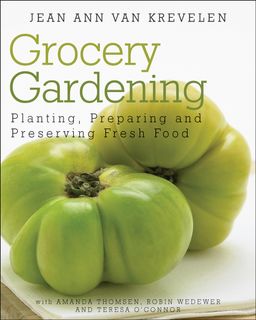
Drumroll, please... Just in time for spring garden planning, Grocery Gardening is now on the shelves at Barnes and Noble, Home Depot and Lowe's. It's packed with tips for planting, preparing and preserving 25 of your favorite fruit, vegetables and herbs.

Eat local. Grocery Gardening guides you from planting the first seeds to preparing delicious meals to preserving produce for winter months. For those items you can't grow yourself, the book explains how to buy quality produce, while supporting your local farmers and communities. Nutritional facts are scattered throughout.


A community effort. You may remember the story about  how Grocery Gardening happened.  The four authors (above) met on Twitter, and used social media to reach thousands of readers before the book was finished. Readers contributed family recipes, personal photos and garden stories, while others provided real-time feedback from around the globe to the authors during the project.

Win a free copy. Enter to win an autographed copy of Grocery Gardening. Simply leave a comment for Seasonal Wisdom by Feb. 14 and tell us:
  • Your favorite fruit, vegetable or herb, and...
  • Your favorite way to eat it
That's it. Your responses can be a few words, if you'd like, but longer responses and delicious recipes are always welcome. The best comments will be featured in future posts and tweets.

The winner will be randomly selected on Valentine's Day, Feb. 14.

It seems only fair to select the winner on this day as we're talking about the love of produce, after all.  We can't wait to hear your thoughts, and thanks to everyone who has contributed to this book so far.

Want more? Hear Jean Ann Van Krevelen of Cool Springs Press explain how social media was a driving force behind the creation of Grocery Gardening.

Monday, February 1, 2010

February Begins


Welcome February! Spring is coming, and I can't help craving flowers like the lovely ones photographed above by Isabel Gomes.

Did You Know? February gets its name from the Latin Februarius, which is derived from februa or "means of cleansing." This was probably due to the many purification rituals that occured this month in earlier times. Personally, I find February a great month for shedding winter weight, cleaning out wintery dust in my home, and celebrating the longer days by reviewing seed catalogs and preparing for spring.

Here's how Nicholas Breton described this month in 1626, using rather interesting spellings:

"It is now February and ... the Valleyes now are painted white
and the brookes are full of water...the trees a little begin to bud
and the sap begins to rise vp out of the root.
There is hope of a better time not farre off..."

Other Fun Facts about February:

The shortest month of the year often has the worst weather. An old proverb explains, "As the days lengthen, the cold strengthens."

Despite the frigid temperatures, many cultures from the Japanese to the Ancient Celts, celebrated the return of spring around this time because of the longer days and increased animal activity. Read more on this subject; and listen to the Nest in Style podcast.

This blog started in February a year ago, making it a particularly significant month for Seasonal Wisdom.

Look for more gardening tips, strange seasonal folklore and fun interviews with local foods and horticultural experts throughout the year. And thanks for your support and comments so far! Please keep them coming...