Showing posts with label corn. Show all posts

Monday, June 14, 2010

Part III - Even More Experts With Must-Have Plants


A suburban garden in New Jersey. An apartment balcony in California. Acreage in northwest Ohio. These gardeners may enjoy the outdoors in different ways, but they all know plenty about plants. Here are their "must-have" plants for this year...


Like gardening blogs? There's a good chance you've read Kylee Baumle's Our Little Acre. Her award-winning blog takes place in a rural northwest Ohio garden. Recently, it was awarded not one, but several 2010 Mouse and Trowel awards.

Somehow this dental hygenist also finds time to write Gardening by the Book and co-write Soil Sisters, as well as write for Cool Springs Press GREEN Program. On Twitter, you can find this busy woman at @OurLittleAcre.
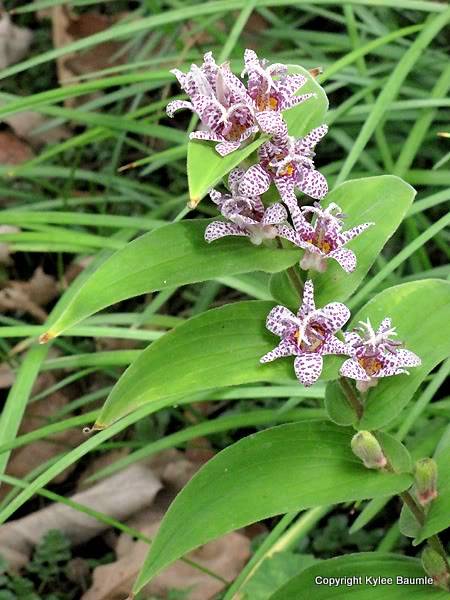


This summer Kylee is thinking about plants "that offer a little out of the ordinary," such as Toad Lily (Tricyrtis sp.) suitable for Zones 5 to 9. Toad Lily 'Miyazaki' is shown above, while Toad Lily 'Tojen' is pictured at the top of this blog post.

These orchid-like flowers bloom in autumn, "when nothing much besides mums and asters are really going to town," says Kylee. "Plus, Toad Lilies come in various colors, and the foliage varies from cultivar to cultivar. Some leaves have spots or stripes. Some are golden in color. And some are traditional green. A particularly nice feature is that they add color to shade gardens and are in the mid-height range."


Her second choice is an edible one ... corn. "Where I live, in northwest Ohio, corn is as common as the dirt it grows in," explains Kylee. "Summer just wouldn't be summer without sweet corn. My favorite variety is the white and yellow bicolor, but I'm a big fan of the pure white, such as 'Silver Queen.' " (Shown above.)


"In August, I make a meal out of just sweet corn," she says with a laugh. "I slather the corn with butter and salt and can eat six ears or more at a time. Most people gain weight over winter, right? For me, it's in August." (Shown above is 'Ruby Queen' corn, which she grew in 2008.)


Gardening in a smaller space? You still have plenty of options. Just ask Fern Richardson, who writes the award-winning blog Life on the Balcony. Also a 2010 Mouse and Trowel award winner, the blog has won praise from Sunset Magazine and others. On Twitter, Fern can be found at @LifeOnTheBlcny.

Some favorite plants Fern likes growing on her California balcony...


The first one is ... Aeonium. "There are so many interesting varieties of Aeoniums, you really can't go wrong," says Fern. "I particularly like the variegated and black varieties like the one in this picture. Their floral-like rosettes provide year-round interest and ask for only the tiniest bit of attention in return."


"Another favorite is chocolate mint," says Fern. "This plant is nearly indestructible, and yet so tasty! I love using the leaves in teas, and they're also a yummy addition to banana bread."

When she makes banana bread, Fern adds 2 to 3 tablespoons of dried chocolate mint with the dry ingredients.


In the New York Metropolitan Area, award-winning landscape and design consultant Susan Cohan is busy managing Susan Cohan Gardens and serving on the Board of Directors for the Association of Professional Landscape Designers. That is... when she's not writing her thought-provoking blog Miss Rumphius' Rules or tweeting as @SusanCohan on Twitter.

Susan admits it's not easy to choose only a few "must-have" plants. But she did agree to provide "two finalists culled from a long list of favorites." As she explains, "I won't give a plant the thumbs up until I've actually grown it. So even from a landscape designer's perspective, both are absolute winners!"


Her first choice is 'Red Romaine' lettuce. The plant really stood out among the rest when she recently designed and planted a large vegetable garden.

"I chose plants based not only on their cool weather preferences," says Susan. "But also for the beauty of their foliage. Unfortunately, the flats were only labeled as 'Red Romaine'. But this unnamed red romaine was my favorite of all the lettuces. It is a striking plant that added a punch of color to a very formal vegetable garden and would look great mixed with ornamentals as well."


Her second choice is the 'Abalone Pearl' peony, shown above.

"The peony has a single clear salmon pink bloom held upright on fernlike foliage," explains Susan. "I hardly ever buy plants for myself anymore. And I even thought about this when I saw the plant in the nursery. But as I was ready to leave, I started to feel remorse at leaving it there. So I had to buy one."

She hasn't regretted her decision yet.

Hear Susan Cohan discuss landscape design (and design in general) on Nest in Style.

Like this? Don't miss these other stories:
Must-Have Plants
Must-Have Plants (Part II)

Favorite Winter Plants (Maine Containers)
Favorite Winter Plants (Northern Idaho)
Favorite Winter Plants (Canada)
Favorite Winter Plants (North Carolina)
Favorite Winter Plants (Western Washington)

More expert plant suggestions to come soon!

Tuesday, March 16, 2010

Seed Advice, Heirloom Seeds, Plant Lists


Purple carrots, blue corn, spotted lettuce and rose pink beans. These are just some of the unusual and delicious vegetables you can grow from seeds in your garden.

Nest in Style Podcast: Eager to learn more about seed starting? Have questions about heirlooms and hybrids? Or, just want more professional garden design tips? Don't miss this Nest in Style podcast episode and hear from three nationally-recognized gardening experts: Nan Sterman, Chris McLaughlin and Rebecca Sweet.

What I'm Growing: While you're listening to Nest in Style, why not look over some of the seeds that I'm growing in the garden this year? You'll see they aren't your average grocery store vegetables.


Beans - "I was determined to know beans," wrote Henry David Thoreau in the late-19th century. And I know just what he means. I love growing beans from seeds. Here are a few beans I've grown in my garden already or that I'm trying this year for the first time.

Bean, Purple Podded Pole - Shown in picture above; purple heirloom bean of northern European origin. Turns green when blanched.

Bean, Ideal Market Pole - Very productive, stringless green pole bean, shown in picture above from harvest 2009.

Bean, Red Swan Bush - Beautiful dusty, red-rose snap bean, which I'm eagerly trying for first time this year. Just think how lovely it will look with purple podded pole beans.

Bean, Pencil Pod Wax Bush - Stringless yellow wax bean that is great for freezing or canning. Trying this one for first time. As you can probably tell, I prefer my beans in unusual colors.

Bean, Painted Pony Bush - Dual purpose bean with long stringless green beans, which later grow to become attractive dry beans in brown and white. These dry beans are highly recommended for soups and stews. I'm trying this variety for the first time, because I'm eager to taste and compare both types of beans.

Bean, Dragon's Tongue Bush - Wax bean with cream-colored pods and thin purple stripes, which disappear when blanched. Below is a picture of some beans I grew in 2009.


I'm growing a lot more than beans, of course. Below are just a few vegetables I'll sow in my garden this year.

Carrot, Cosmic Purple: Bright purple carrots with shades of yellow and orange. Trying for first time.

Carrot, Jaune Obtuse Du Doubs: Lemon-yellow carrot with fine, sweet taste. Trying for first time.
 
Carrot, St. Valery: French variety dating back to at least 1885, handsome bright, red-orange carrots. Trying for first time.

Carrot, Tonda di Parigi: Round in shape, these orange, 19-century Parisian heirloom carrots are 1 to 2 inches long. Ideal for rocky soil. Trying for first time.

Radish Helios: Yellow, olive shaped radishes; Baker Creek Heirloom Seed Company reports this heirloom came from Alzbeta Kovacova-Pecarova of Kosice, Slovakia (very near the village where my grandfather was born!) Trying for first time with great delight.

Radish, Purple Plum: Bright-purple skin with crisp white flesh. Trying for first time.

Radish, Long Scarlet: Long and slender, bright red radish that dates back to pre-1870s.  Radish that looks a bit like a carrot -- How cool is that! Trying for first time.

Plus, I can't wait to try ...

Corn, Blue Jade: Steel-blue cobs that become jade-blue when boiled. Dwarf plants that grow 2 to 3 feet bear 3 to 6 ears of corn. One of the few sweet corns that can be grown in containers. Trying for first time.

Squash, Lebanese White Bush Marrow: Rare variety of cream, oblong summer squash, which is delicious baked or fried. Trying for first time.

Speaking of squash, I loved this winter squash I grew last year:

Squash, Musquee de Provence: Averaging 20 pounds, this French variety of winter squash has orange, blue and green colors that ripen to a deep, rich brown. The deep orange flesh is great for baking.

Salads will be made with greens such as these:

Lettuce, Merveille Des Quatre Saisons (Marvel of Four Seasons): With a name like that, how could I not grow this French variety? This bibb letuce has ruby-red leaves with tightly folded green hearts. I've grown this tasty heirloom several years.

Lettuce, Forellenschluss: This old Austrian heirloom is a favorite of mine. The green romaine leaves are speckled with deep rose, and stand up well to salad dressings.This lettuce is as beautiful as it is delicious.

Arugula, Apollo: Productive variety of domesticated rocket; high in vitamin C; excellent in salad mixtures.


That's not all I'm growing this year either. They'll be more cool-season and warm-season plants, which I'll start inside from seeds, direct seed out in the garden, or buy as transplants from local nurseries or farmer's markets. We're lucky here, for instance, to have many unusual varieties of tomatoes, peppers and eggplants available for purchase.

Whatever you decide to grow this year, just remember, it's important to rotate your vegetable crops each year. Want more information? Read the Seasonal Wisdom post on crop rotation.

Happy growing!

Wednesday, April 1, 2009

Are You Fooling? It's April!

"Hail April, the Medea of the year,
That makest all things young and fresh appear."
R. Chambers, The Book of Days, 1866

It's the first day of April. Each day, spring grows stronger in its fight against winter. And our gardens start to look especially lovely after months of gray, dreary days.

The colorful bulb garden (above) belongs to my neighbors, Elaine and Pat McCoy. Stroll around their suburban garden and you can tell Elaine was trained as a master gardener in Idaho. The soil is amended each year with well-aged cow manure, and they are meticulous about cleaning up debris that might have overwintered pests and pathogens.

The effort shows in the McCoy's thriving gardens. I shot this picture last year around mid-April. Wait until you see how lovely their vegetable garden will look in a few months. These two are experts at growing loads of edibles in a small amount of space. Most of which they started from seeds.

And I'm not fooling! Even though today is called "All Fool's Day."

Incidentally, is it stormy where you are? That's not a bad thing, according to this old proverb:

"If it thunders on All Fools' Day
it brings good crops of corn and hay."