Showing posts with label Favorite plants. Show all posts

Wednesday, September 8, 2010

Must-Have Plants I'm Growing


"We have plowed, we have sowed,
We have reaped, we have mowed,
We have brought home every load,
Hip, hip, hip, harvest home."
Traditional English Harvest Verse

For the last few months, I've spoken with some of the nation's most well-known garden writers, bloggers and personalities about their must-have plants. So, you might just be wondering which plants I can't live without myself. That's why this blog post is dedicated to my 2010 harvest ... and some of my favorite plants.

As you can see above and below, my garden is a rather unruly mix of wildflowers, roses and perennials. The Shirley and California poppies self-seeded themselves from last year, and seem determined to take over my late-spring/early-summer garden.

As garden writer and designer Rebecca Sweet would say, there are a lot of "showgirls" in my garden. These are the plants that bloom outrageously and then disappear in winter. So, I'm working on adding more four-season interest to my new garden, including some lovely little boxwood shrubs which you can't see here because of all the showgirls. But I'll be glad to have their evergreen shapes in the winter months. You can hear more about showgirl plants from my Nest in Style podcast interview with Rebecca Sweet.


I'm a big fan of succession planting. So although my raised beds started out with lettuces and radishes of all types in early spring, they were replaced with squash and corn when the weather heated up.


Last year, I grew a bean teepee in this raised bed. This year, I'm growing 'Blue Jade' corn that was supposed to grow about three feet. They must like my growing conditions, because they are easily five feet tall now. I'm just starting to pull the blue-colored corn now. Incidentally, it's always good to plant corn in blocks (rather than rows) so they can self-pollinate themselves well.


Eggplants are a great way to grow attractive, delicious plants in small spaces. 'Rosa Bianca' eggplant is an Italian heirloom that will shine in any ornamental garden bed. But I like to grow them in containers too. The flowers are as pretty as the delicious fruit.


'Calliope' eggplant is a hybrid with striped fruit that are adorable. Harvest these eggplants when they reach about 2 to 3 inches in size. Great for northern climates, this eggplant ripens in about 65 days.


My 'Little Fingers' eggplant grew huge in a container, and never stopped producing tiny, black eggplants the size of chubby fingers. This early variety ripens in under 70 days. Incidentally, these containers with eggplants were filled with salad greens of all types in the spring.  Learn more about lettuces.


Grow lots of vegetables, and you can make strange faces with your food too. Starting at the top are 'Calliope' eggplants, 'Patterson Golden Scallop' squash, 'Lebanese White Bush Marrow' squash, 'Little Fingers' eggplants and 'Fairy Tale' eggplants. Incidentally, 'Fairy Tale' eggplants are also excellent in containers, and ripen quickly for northern gardens.


It wouldn't be summer without tomatoes of all types. That's why I grew varieties that ripened at different times. Pictured above (starting top left) are cute 'Yellow Perfect Sugar' (grown by a friend); 'Black Krim;' 'Green Zebra' (grown by a friend); 'Black Sea Man'; 'Isis candy' cherries; 'Tomacchio' and 'Principe Borghese' varieties for drying; as well as 'Stupice' which ripened easily a month before the others. Plus, some 'Osmin' purple basil. Tomato growing tips. Six tomatoes for cooking and preserving.


Beans are another favorite vegetable for us. And we especially love the ones that aren't green. Above are beautiful spotted 'Dragon's Tongue;' pinkish 'Red Swan Bush;' and yellow 'Pencil Pod Wax Bean.' Alongside the beans are flowering oregano stems that make the bees in my garden very happy. More about beans.

The weather is gradually growing colder, and there are only a few more weeks to enjoy these summer vegetables. But I'm already planting carrots, radishes and salad greens for the fall. There is nothing better than delicious food out in the garden, even in the colder months.

Meanwhile, what are some of your favorite must-have plants in the garden? Do you agree with these folks?

Must Haves (Kylee Baumle, Fern Richardson, Susan Cohan)
Must Haves (Joe Lamp'l, Patti Moreno, Theresa Loe of Growing a Greener World TV)
Must Haves (JeanAnn Van Krevelen, Lisa Gustavson, Michael Lieberman)
Fav Winter Plants (Kerry Michaels, Maine)
Fav Winter Plants (Dan Eskelson, No. Idaho)
Fav Winter Plants (Doug Green, Canada)
Fav Winter Plants (Helen Yoest, North Carolina)
Fav Winter Plants (Christina Salwitz, Western Washington)

Wednesday, September 1, 2010

Must-Have Plants (Jean Ann Van Krevelen, Lisa Gustavson, Mike Lieberman)

Photo by Elaphurus on Flickr
It's harvest time! So, this segment of "must-have" plants spotlights delicious and delightful edibles of all types. These three clever gardeners, from across the nation, show you how beautiful fresh food can be ... and how you can grow vegetables, herbs and fruit in even the smallest urban spaces.


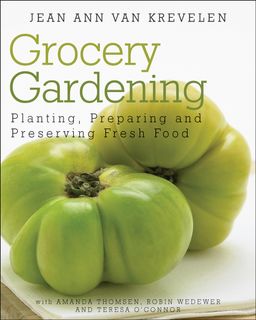
Jean Ann Van Krevelen is a big fan of fresh foods from her Portland, Oregon (Zone 8) garden. She was the main author of Grocery Gardening: Planting, Preparing and Preserving Fresh Foods, which I also co-authored. She also co-hosts the funny and popular Good Enough Gardening podcast with Amanda Thomsen on iTunes. Somehow she finds time to be social media director at Cool Springs Press. Find Jean Ann on Twitter @JeanAnnVK. Or, at her blog Gardener to Farmer.

Jean Ann likes her edibles to not only taste good, but look lovely as well. Perfect example? The purple tomatillos at the top of this post.

"I just love purple tomatillos," says Jean Ann. "In addition to being absolutely gorgeous, they produce in cooler weather than tomatoes. Their crisp, clean, slightly sour taste is ideal for fresh dishes like salads and salsas. Cook them down into a sauce and use them in Mexican or Asian dishes."

Photo by beautifulcataya on Flickr
Another favorite is 'Peacock' broccoli. "It's twice the bang for the buck," explains Jean Ann. "You can eat the little broccoli florets and the leaves. This broccoli is tender and small, so it doesn't need much cooking. Try it in salads, stir fries and grilled dishes. The leaves can be used as kale and incorporated into almost any dish. They will be a bit more tough, so blanch the leaves or saute them."


For more than 16 years, Lisa Gustavson has enjoyed spending time in the garden. In Western New York State (Zone 5b), she grows lots of unusual vegetables and fruits, mixed with flowers, throughout her charming half-acre property. Lisa is known by gardeners nationwide for her popular blog Get In The Garden. Or on Twitter at @GetInTheGarden.

Photo by Lisa Gustavson
As a young girl, Liza never particularly cared much for pumpkin pie. But now she simply loves the pie made with winter squash like this gorgeous heirloom 'Galeux d' eysines' (shown above). The beauty of this healthy vegetable is a big plus.

"The squash's sweet flavor may have won me over," she recalls. "But it was the plant's long, rambling vines and huge orange blossoms that hooked me on growing them. The sight of such a large plant unfurling from one seed is just amazing to me."

Photo by Lisa Gustavson
Fresh beans have meant "summer" to Lisa since she was a little girl. "Back then, the beans were from a local farm market," she remembers. "Now as an adult I plant different heirloom beans to eat fresh and can. I also plant varieties for drying for winter soups and stews. They're easy to grow and the beans are just beautiful."

Shown above are her stylishly spotted 'Rattlesnake' beans, green 'Vermont Cranberry' beans and purple 'Trionfo Violetto' beans. These beautiful beans elevate a simple meal into a gourmet experience.


Who says you can't grow food in small places? Mike Lieberman has grown food on a tiny fire escape in New York City (Zone 6), and a small balcony in sunny Los Angeles (Zone 10). Regardless of the size of his garden, he always eats well. Known to thousands on Twitter as @CanarsieBK, this active blogger, social media consultant and writer "walks the talk" when it comes to green living. You can learn more at http://www.canarsiebk.com/.

Have a small garden yourself? Michael recommends vegetables, fruits and herbs with a high yield. Here are some of his must-have plants for urban living.

Photo by Mike Lieberman
"A container filled with lettuces will make it to your plate quickly," explains Mike. "Plus, this plant will provide for you for many months. Growing your own lettuces helps to cut your food bills, because you'll have plenty of fresh homegrown greens to enjoy." 

The above picture shows different leaf lettuces alongside a pot of thyme as well as 'Jimmy Nardello's Sweet Italian' and 'Chili Rellenos' pepper plants on a New York City fire escape. More on lettuces.

Photo by Mike Lieberman
Herbs are a terrific food value, according to Michael. "It doesn't matter what herb you grow as long as it is one you are going to use," he says. "When you go to the store, you have to buy a bunch for 2 to 3 dollars, even when you only need a sprig. The rest winds up going to waste. Grow your own herbs, and you can harvest them as you need them. They'll last much longer too."

Mike's apple mint (left) and greek oregano (right) are growing alongside tomatoes and rosemary in the above picture. It's a perfect example of how delicious seasonings will survive growing conditions in one of the world's most urban environments.

My favorites? Over the months, you've read plant choices from some of the nation's most well-known garden writers, designers and bloggers. You may even be wondering which plants I personally can't live without. Tune in next week to find out ... when I reveal some of my favorite plants of summer 2010, complete with lots of photos. Meanwhile, don't miss these other plant picks.

Monday, June 14, 2010

Part III - Even More Experts With Must-Have Plants


A suburban garden in New Jersey. An apartment balcony in California. Acreage in northwest Ohio. These gardeners may enjoy the outdoors in different ways, but they all know plenty about plants. Here are their "must-have" plants for this year...


Like gardening blogs? There's a good chance you've read Kylee Baumle's Our Little Acre. Her award-winning blog takes place in a rural northwest Ohio garden. Recently, it was awarded not one, but several 2010 Mouse and Trowel awards.

Somehow this dental hygenist also finds time to write Gardening by the Book and co-write Soil Sisters, as well as write for Cool Springs Press GREEN Program. On Twitter, you can find this busy woman at @OurLittleAcre.


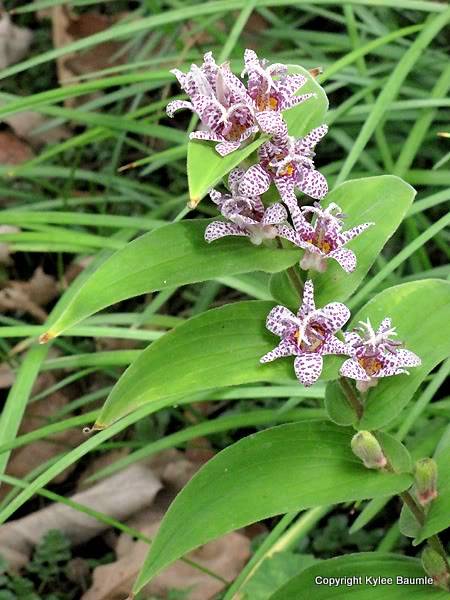
This summer Kylee is thinking about plants "that offer a little out of the ordinary," such as Toad Lily (Tricyrtis sp.) suitable for Zones 5 to 9. Toad Lily 'Miyazaki' is shown above, while Toad Lily 'Tojen' is pictured at the top of this blog post.

These orchid-like flowers bloom in autumn, "when nothing much besides mums and asters are really going to town," says Kylee. "Plus, Toad Lilies come in various colors, and the foliage varies from cultivar to cultivar. Some leaves have spots or stripes. Some are golden in color. And some are traditional green. A particularly nice feature is that they add color to shade gardens and are in the mid-height range."


Her second choice is an edible one ... corn. "Where I live, in northwest Ohio, corn is as common as the dirt it grows in," explains Kylee. "Summer just wouldn't be summer without sweet corn. My favorite variety is the white and yellow bicolor, but I'm a big fan of the pure white, such as 'Silver Queen.' " (Shown above.)


"In August, I make a meal out of just sweet corn," she says with a laugh. "I slather the corn with butter and salt and can eat six ears or more at a time. Most people gain weight over winter, right? For me, it's in August." (Shown above is 'Ruby Queen' corn, which she grew in 2008.)


Gardening in a smaller space? You still have plenty of options. Just ask Fern Richardson, who writes the award-winning blog Life on the Balcony. Also a 2010 Mouse and Trowel award winner, the blog has won praise from Sunset Magazine and others. On Twitter, Fern can be found at @LifeOnTheBlcny.

Some favorite plants Fern likes growing on her California balcony...


The first one is ... Aeonium. "There are so many interesting varieties of Aeoniums, you really can't go wrong," says Fern. "I particularly like the variegated and black varieties like the one in this picture. Their floral-like rosettes provide year-round interest and ask for only the tiniest bit of attention in return."


"Another favorite is chocolate mint," says Fern. "This plant is nearly indestructible, and yet so tasty! I love using the leaves in teas, and they're also a yummy addition to banana bread."

When she makes banana bread, Fern adds 2 to 3 tablespoons of dried chocolate mint with the dry ingredients.


In the New York Metropolitan Area, award-winning landscape and design consultant Susan Cohan is busy managing Susan Cohan Gardens and serving on the Board of Directors for the Association of Professional Landscape Designers. That is... when she's not writing her thought-provoking blog Miss Rumphius' Rules or tweeting as @SusanCohan on Twitter.

Susan admits it's not easy to choose only a few "must-have" plants. But she did agree to provide "two finalists culled from a long list of favorites." As she explains, "I won't give a plant the thumbs up until I've actually grown it. So even from a landscape designer's perspective, both are absolute winners!"


Her first choice is 'Red Romaine' lettuce. The plant really stood out among the rest when she recently designed and planted a large vegetable garden.

"I chose plants based not only on their cool weather preferences," says Susan. "But also for the beauty of their foliage. Unfortunately, the flats were only labeled as 'Red Romaine'. But this unnamed red romaine was my favorite of all the lettuces. It is a striking plant that added a punch of color to a very formal vegetable garden and would look great mixed with ornamentals as well."


Her second choice is the 'Abalone Pearl' peony, shown above.

"The peony has a single clear salmon pink bloom held upright on fernlike foliage," explains Susan. "I hardly ever buy plants for myself anymore. And I even thought about this when I saw the plant in the nursery. But as I was ready to leave, I started to feel remorse at leaving it there. So I had to buy one."

She hasn't regretted her decision yet.

Hear Susan Cohan discuss landscape design (and design in general) on Nest in Style.

Like this? Don't miss these other stories:
Must-Have Plants
Must-Have Plants (Part II)

Favorite Winter Plants (Maine Containers)
Favorite Winter Plants (Northern Idaho)
Favorite Winter Plants (Canada)
Favorite Winter Plants (North Carolina)
Favorite Winter Plants (Western Washington)

More expert plant suggestions to come soon!

Wednesday, June 9, 2010

Part II - More Experts Share Must-Have Plants


As we enter into June, the peak growing season is upon us. So, I turned to two more gardening experts for their "must-have" plants for 2010.

Here are the plants they can't live without this year...


In the San Francisco Bay area, Rebecca Sweet knows plenty about plants. The talented landscape designer owns Harmony in the Garden and her creatively inspired garden designs have been featured in Fine Gardening Magazine. She writes a popular blog called Gossip in the Garden and can be found on Twitter as @SweetRebecca.


Rebecca's job takes her around lovely plants each day. But one of her current favorites is Nicotiana mutabilis purchased at Annies Annuals. (The plant is the tall pinkish-purple flower in the above photo; a closeup photo is at the top of this blog post.)

"This plant might look tender and delicate," explains Rebecca. "But mine has been unbelieveably tough, surviving through freezing temperatures. It towers over 8 feet tall with scads of multi-color flowers that bloom for months. Plant one near a window, and you'll have a room filled with the most heavenly scent."


Another plant that has won Rebecca's heart is the Euphorbia 'Blackbird' shown above. "I'm always on the lookout for plants that give my clients the biggest bang for the buck," she explains. "This euphorbia tops my list. It has the darkest, most velvety maroon-colored leaves, and the flowers are a gorgeous complimentary chartreuse green."


This euphorbia is beautiful in a mixed garden bed, as you can see above. But the plant is also a practical choice. "It's deer-resistant, snail proof and drought tolerant," adds Rebecca. "In our Zone 9 climate, this plant is an evergreen. All it needs is a little dead-heading once in awhile. But watch that sap, as it can be a skin irritant."

Hear more gardening tips from this award-winning garden designer on Nest in Style.


Jenny Peterson is the owner of J. Peterson Garden Design in Austin, Texas. On Twitter, she's known for her gardening tweets as @MulchMaven, and her delightful blog was a nominee in the 2010 Mouse & Trowel Awards.

As much as this talented landscape designer loves flowers, she admits her "must-haves" right now simply aren't flowering plants.

Photo by BambooGarden.org 
Jenny has fallen hard for Bambusa multiplex 'Alphonse Karr'. "This gorgeous clumping bamboo grows up to 15 feet tall," she says. "But it spreads slowly, so the plant doesn't have the invasive qualities of other bamboos. With the lower-to-medium height, it makes a great screen. Plus, the yellow culms are smaller in diameter, making it easy for homeowners to cut back."

The designer likes the Alphonse Karr bamboo in minimalist contemporary landscapes, as well as blended into Asian and tropical landscapes.

Photo by Northern Territory Government, Australia

Another favorite is Mexican Feather Grass (Nasella tenuissima). "I love this smaller ornamental grass and use it at many of my clients' homes," says Jenny. "It grows to 2 feet high. And the smaller size makes it very versatile in the landscape, while the chartreuse green color and fine texture make this plant a beautiful accent."

This grass will reseed, but Jenny says it's easily controlled. She likes to plant this grass en masse or as an accent to other plants.


Coming soon! More must-have plants for June.
 

Wednesday, May 5, 2010

Five Experts Share Their Must-Have Plants


It's early May, and no doubt many gardeners are asking themselves what to grow this year. So, I turned to five experts for advice on some of their favorite plants.

These folks are landscape designers, garden bloggers, journalists and ordinary citizens from around the nation. But the one thing they have in common is their love of gardening. Here are some of their "must-have" plants for 2010.


In North Carolina (Zone 7a), Anna Looper is known as "Flowergardengirl" for her highly popular gardening blog, which was named Best North Carolina blog and Best Design in 2009 by Blotanical.com. She also details her gardening adventures in Decorate a Garden.

In her cottage craftsman-style gardens, Anna likes to grow the pale yellow lavender cotton (Santolina chamaecyparissus) mixed with colorful annuals.


"Lavender cotton is my favorite perennial for its soft yellow flowers and grey green foliage that remain evergreen in my garden," says Anna. "I especially like this plant's ability to repel moths, when dried. I often pair lavender cotton with 'Raspberry Blast' Supertunia by Proven Winners. Supertunias are a favorite, because they bloom from early spring to after the first frost."


Further north in Massachusetts (Zone 6), Andrew Keys is a professional landscape designer. He owns and operates Oakleaf Green Landscape Design, and his plant suggestions have been featured in Fine Gardening Magazine. Andrew can be found at @oakleafgreen on Twitter; or at his popular Garden Smackdown blog.

Despite Andrew's long love affair with plants, however, this is his first year to grow annuals. So, what annual won him over finally? A new variety from Australia called Ptilotus 'Joey.'


"It took a really interesting annual to get my attention," admits Andrew. "Ptilotus 'Joey' is known as pink mulla mulla in its native Australia. The drought tolerant plant has fuzzy, silvery pink spikes of flowers. If it reminds you of Amaranthus, you're not far off. It's in the same family."


"The other plant I can't live without this year is the perennial Baptisia Twilite Prairieblues (TM)," he adds. "I can't say enough about this cultivar of false indigo. It's vigorous, with fascinating flowers of the deepest purple, and glaucous leaves that mature to an eye-catching steely blue. I've added more of this plant to my garden this year, and I imagine I'll be planting it in my clients' gardens for a long time to come."


Over in Texas (Zone 8a/b), Pamela Price has her mind on edibles this year. A well-known advocate for victory and kitchen gardens nationwide, the journalist writes the popular redwhiteandgrew blog. On Twitter, you can find her tweeting with thousands of gardeners, foodies and others as @redwhiteandgrew.

Pamela mixes edibles with ornamentals in her front yard for what she calls "a Texas Hill Country cottage garden look." Succulents, semi-succulents, roses and larkspurs share space happily with tomato plants and herbs.


"My hands-down favorite herb is good ol' upright rosemary," says Pamela. "We planted the rosemary the first spring in our home, and it has grown up alongside our son. In fact, when he was a toddler, he used to pick off pieces and give it to visitors to take with them. The ancient idea of 'rosemary for remembrance' resonates, even with kids."

Incidentally, one of her son's favorite recipes is adapted from The Joy of Cooking. "We stuff our roast chicken with onions, garlic, lemon and three fat sprigs of fresh-picked rosemary," says Pamela. "It's delicious!"


"My newer favorite tomato is 'Juliet,'" says Pamela. "When ripe, the fruit has an orange-red color and is oblong in shape. Last year's plant yielded so many tomatoes in the fall that, come Thanksgiving, we were ready for it to stop production. In a place where many tomato varieties can struggle (especially heirlooms), I think there's much to be said for the prolific, hearty Juliet hybrid."


In Virginia (Zone 7b), Tee Riddle knows plenty about vegetables. In fact, he writes all about growing vegetables at his blog Veggie Gardener. On Twitter, you can find him sharing his gardening knowledge as @TeeRiddle.

Being raised in the South, Tee has always considered a few vegetables to be important staples in his gardens. One is okra. Yes, okra. And the way Tee describes this vegetable makes me wonder why everyone isn't growing it too.


"Okra has been a family favorite for as long as I can remember," says Tee. "It is the perfect vegetable during those dry, blistering summer days, as it seems to thrive the hotter it gets. The morning blossoms of the okra plant are as beautiful as many ornamentals. In fact, they resemble the hibiscus bloom, which is a cousin to okra. My favorite okra varieties are 'Clemson Spineless' and 'Red Velvet'."


"Zucchini is my second must-have vegetable for 2010," explains Tee. "It is fairly easy to grow and very versatile in the kitchen. Zucchini can be used to make delicious bread, added to stews, grilled, sauteed and the southern classic - battered and fried. For our region, 'Black Beauty' and 'Aristocrat' are popular varieties."


In Oklahoma (Zone 7a), Dee Nash has gardened for more than 27 years in a state known for its red clay and sandy soil. She records these adventures in her reddirtramblings blog, which was named one of Horticulture Magazine's Top 20 Favorite Gardening Blogs. On Twitter, she's known as @reddirtramblin.

Dee grows more than 90 roses on her 7.5 acre property, but she named other flowers as her favorites this year, such as this lovely red Gladiolus 'Atomic.'


"Last summer was the first time I grew this bulb at the back of my log cabin," recalls Dee. "This gladiolus is fire engine red with petals so soft you want to touch them. This is definitely one of my favorite show-stopping plants. A true beauty in every sense of the word. And just like it's name, this flower is flaming hot."


"Another favorite is Papaver 'Lauren's Grape,'" says Dee. "This purple poppy was selected by Lauren Springer Ogden, gardener and author in Austin, Texas. The flower has papery petals of lavender with a drop of dark purple at the bottom. It also sports blue gray foliage, a beautiful poppy trait. Papaver will reseed in the garden, and poppies are a late spring delight."

From poppies and petunias to tomatoes and okra, these are a few plants to consider for your garden. For other ideas, ask neighbors and local nurseries for varieties that grow well in your region.

Don't forget your local master gardening organization is a terrific free gardening resource too. 

Meanwhile, it's not too early to consider how that lush, green garden will look in the dead of winter, and start planning now. For more advice: