Monday, June 14, 2010

Part III - Even More Experts With Must-Have Plants


A suburban garden in New Jersey. An apartment balcony in California. Acreage in northwest Ohio. These gardeners may enjoy the outdoors in different ways, but they all know plenty about plants. Here are their "must-have" plants for this year...


Like gardening blogs? There's a good chance you've read Kylee Baumle's Our Little Acre. Her award-winning blog takes place in a rural northwest Ohio garden. Recently, it was awarded not one, but several 2010 Mouse and Trowel awards.

Somehow this dental hygenist also finds time to write Gardening by the Book and co-write Soil Sisters, as well as write for Cool Springs Press GREEN Program. On Twitter, you can find this busy woman at @OurLittleAcre.
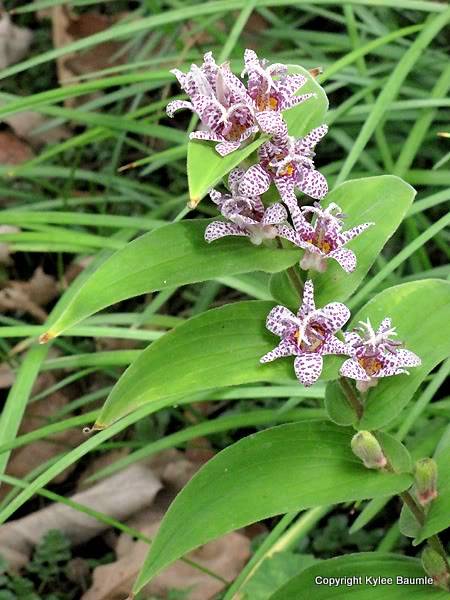


This summer Kylee is thinking about plants "that offer a little out of the ordinary," such as Toad Lily (Tricyrtis sp.) suitable for Zones 5 to 9. Toad Lily 'Miyazaki' is shown above, while Toad Lily 'Tojen' is pictured at the top of this blog post.

These orchid-like flowers bloom in autumn, "when nothing much besides mums and asters are really going to town," says Kylee. "Plus, Toad Lilies come in various colors, and the foliage varies from cultivar to cultivar. Some leaves have spots or stripes. Some are golden in color. And some are traditional green. A particularly nice feature is that they add color to shade gardens and are in the mid-height range."


Her second choice is an edible one ... corn. "Where I live, in northwest Ohio, corn is as common as the dirt it grows in," explains Kylee. "Summer just wouldn't be summer without sweet corn. My favorite variety is the white and yellow bicolor, but I'm a big fan of the pure white, such as 'Silver Queen.' " (Shown above.)


"In August, I make a meal out of just sweet corn," she says with a laugh. "I slather the corn with butter and salt and can eat six ears or more at a time. Most people gain weight over winter, right? For me, it's in August." (Shown above is 'Ruby Queen' corn, which she grew in 2008.)


Gardening in a smaller space? You still have plenty of options. Just ask Fern Richardson, who writes the award-winning blog Life on the Balcony. Also a 2010 Mouse and Trowel award winner, the blog has won praise from Sunset Magazine and others. On Twitter, Fern can be found at @LifeOnTheBlcny.

Some favorite plants Fern likes growing on her California balcony...


The first one is ... Aeonium. "There are so many interesting varieties of Aeoniums, you really can't go wrong," says Fern. "I particularly like the variegated and black varieties like the one in this picture. Their floral-like rosettes provide year-round interest and ask for only the tiniest bit of attention in return."


"Another favorite is chocolate mint," says Fern. "This plant is nearly indestructible, and yet so tasty! I love using the leaves in teas, and they're also a yummy addition to banana bread."

When she makes banana bread, Fern adds 2 to 3 tablespoons of dried chocolate mint with the dry ingredients.


In the New York Metropolitan Area, award-winning landscape and design consultant Susan Cohan is busy managing Susan Cohan Gardens and serving on the Board of Directors for the Association of Professional Landscape Designers. That is... when she's not writing her thought-provoking blog Miss Rumphius' Rules or tweeting as @SusanCohan on Twitter.

Susan admits it's not easy to choose only a few "must-have" plants. But she did agree to provide "two finalists culled from a long list of favorites." As she explains, "I won't give a plant the thumbs up until I've actually grown it. So even from a landscape designer's perspective, both are absolute winners!"


Her first choice is 'Red Romaine' lettuce. The plant really stood out among the rest when she recently designed and planted a large vegetable garden.

"I chose plants based not only on their cool weather preferences," says Susan. "But also for the beauty of their foliage. Unfortunately, the flats were only labeled as 'Red Romaine'. But this unnamed red romaine was my favorite of all the lettuces. It is a striking plant that added a punch of color to a very formal vegetable garden and would look great mixed with ornamentals as well."


Her second choice is the 'Abalone Pearl' peony, shown above.

"The peony has a single clear salmon pink bloom held upright on fernlike foliage," explains Susan. "I hardly ever buy plants for myself anymore. And I even thought about this when I saw the plant in the nursery. But as I was ready to leave, I started to feel remorse at leaving it there. So I had to buy one."

She hasn't regretted her decision yet.

Hear Susan Cohan discuss landscape design (and design in general) on Nest in Style.

Like this? Don't miss these other stories:
Must-Have Plants
Must-Have Plants (Part II)

Favorite Winter Plants (Maine Containers)
Favorite Winter Plants (Northern Idaho)
Favorite Winter Plants (Canada)
Favorite Winter Plants (North Carolina)
Favorite Winter Plants (Western Washington)

More expert plant suggestions to come soon!

Wednesday, June 9, 2010

Part II - More Experts Share Must-Have Plants


As we enter into June, the peak growing season is upon us. So, I turned to two more gardening experts for their "must-have" plants for 2010.

Here are the plants they can't live without this year...


In the San Francisco Bay area, Rebecca Sweet knows plenty about plants. The talented landscape designer owns Harmony in the Garden and her creatively inspired garden designs have been featured in Fine Gardening Magazine. She writes a popular blog called Gossip in the Garden and can be found on Twitter as @SweetRebecca.


Rebecca's job takes her around lovely plants each day. But one of her current favorites is Nicotiana mutabilis purchased at Annies Annuals. (The plant is the tall pinkish-purple flower in the above photo; a closeup photo is at the top of this blog post.)

"This plant might look tender and delicate," explains Rebecca. "But mine has been unbelieveably tough, surviving through freezing temperatures. It towers over 8 feet tall with scads of multi-color flowers that bloom for months. Plant one near a window, and you'll have a room filled with the most heavenly scent."


Another plant that has won Rebecca's heart is the Euphorbia 'Blackbird' shown above. "I'm always on the lookout for plants that give my clients the biggest bang for the buck," she explains. "This euphorbia tops my list. It has the darkest, most velvety maroon-colored leaves, and the flowers are a gorgeous complimentary chartreuse green."


This euphorbia is beautiful in a mixed garden bed, as you can see above. But the plant is also a practical choice. "It's deer-resistant, snail proof and drought tolerant," adds Rebecca. "In our Zone 9 climate, this plant is an evergreen. All it needs is a little dead-heading once in awhile. But watch that sap, as it can be a skin irritant."

Hear more gardening tips from this award-winning garden designer on Nest in Style.


Jenny Peterson is the owner of J. Peterson Garden Design in Austin, Texas. On Twitter, she's known for her gardening tweets as @MulchMaven, and her delightful blog was a nominee in the 2010 Mouse & Trowel Awards.

As much as this talented landscape designer loves flowers, she admits her "must-haves" right now simply aren't flowering plants.

Photo by BambooGarden.org 
Jenny has fallen hard for Bambusa multiplex 'Alphonse Karr'. "This gorgeous clumping bamboo grows up to 15 feet tall," she says. "But it spreads slowly, so the plant doesn't have the invasive qualities of other bamboos. With the lower-to-medium height, it makes a great screen. Plus, the yellow culms are smaller in diameter, making it easy for homeowners to cut back."

The designer likes the Alphonse Karr bamboo in minimalist contemporary landscapes, as well as blended into Asian and tropical landscapes.

Photo by Northern Territory Government, Australia

Another favorite is Mexican Feather Grass (Nasella tenuissima). "I love this smaller ornamental grass and use it at many of my clients' homes," says Jenny. "It grows to 2 feet high. And the smaller size makes it very versatile in the landscape, while the chartreuse green color and fine texture make this plant a beautiful accent."

This grass will reseed, but Jenny says it's easily controlled. She likes to plant this grass en masse or as an accent to other plants.


Coming soon! More must-have plants for June.
 

Friday, June 4, 2010

Bone Appetit! Pup Cakes for Your Pooch


When our loveable mutt Maggie May celebrated her second birthday, we knew she deserved something special. So, we invited all her favorite pups over for a party in the backyard. But that’s not all. We also ordered a professionally baked pup cake by Chef Joanie Veage, owner of RYouBeingServed.

Over the years, Chef Joanie has cooked for well-known stars like the Rolling Stones, Sheryl Crow, Def Leppard, Guns-n-Roses, Meg Ryan, Ozzy Osbourne, and other celebrities. But her favorite customers now are the four-legged kind, who she thrills with recipes like this one…


Muttballs and Pup Cakes


2 – 3 lbs raw, ground chicken or turkey (preferably antibiotic and hormone free)

4 cups of steamed, organic, sweet brown rice

1 cup grated summer squash or zucchini

1 cup grated broccoli

1 cup grated green beans

1 cup grated carrots

1 giant handful shredded spinach

1 small bunch grated parsley

½ cup grated celery

¼ cup coconut oil (optional)

1 tablespoon granulated, organic garlic powder

Prepare ingredients as suggested above. Joanie uses organic or clean, local vegetables in her cakes.

Using a food processor, finely grate vegetables. In a stand mixer, combine all ingredients. For muttballs, scoop 1 to 2 inch ball directly on a baking pan. For pup cakes, scoop directly into a lightly oiled (not sprayed) cake tin.

Bake in preheated oven, 350 degrees F. for 20 to 30 minutes or until golden brown. Remove from oven. Cool.

Store in airtight container and refrigerate up to 5 days. Or, place in freezer bags for up to 6 weeks.

Serve as a small sliver. Or, mix a couple tablespoons with their dog food. For dogs not used to eating this type of food, it’s recommended to start with smaller portions.


As you can see below, the party was a big hit with birthday dog Maggie. Just look at that grin. It says it all.

Monday, May 17, 2010

Eight Easy-To-Grow Edible Flowers

Wake up your taste buds with these eight flavorful flowers that taste as good as they look.

Photo by RC Designer on Flickr
Borage, (Borago officinalis): This annual grows 2 to 4 feet tall with purplish blue, star-shaped flowers that "make the mind glad," according to renowned 16-century herbalist John Gerarde. Sow seeds in a sunny spot after the last frost, or earlier in warm climates. Borage tolerates most soil types and usually reseeds itself. Transplanting isn't recommended due to the taproot.

Borage adds a cucumber taste to salads, dips and cold soups. Freeze flowers in ice cubes to float in decorative drinks. In large amounts, borage may have a diuretic effect.

Photo by Isabel Gomes
Calendula (Calendula officinalis): Also known as pot marigold, this annual was a favorite in medieval cooking pots. Calendula grows up to 20 inches tall, with attractive pale yellow to deep orange flowers. Sow seeds in a sunny spot in well-drained soil. Provide afternoon shade in hot temperatures. In colder climates, start indoors. This easy-to-grow plant self-sows freely.

Sometimes called "poor man's saffron," calendula has a slightly bitter taste. Petals add color to scrambled eggs, cheeses, poultry and rice. Try chopped leaves and petals in soups, salads and stews. Use caution if you have allergies to ragweed, asters and other members of the Compositae family.

Photo by Eran Finkle on Flickr
Chamomile (Matricaria recutita):  This annual has tiny daisy-like flowers immortalized in "The Tale of Peter Rabbit," when Mrs. Rabbit brewed a calming tea for her son Peter. Easily grown from seeds sown in spring, chamomile grows 1 to 2 feet tall in full sun. It prefers neutral to slightly acidic soil with good drainage. Chamomile reseeds easily, and can be invasive in some regions.

Chamomile's sweet apple flavor and fragrance make a delicious tea. Steep a teaspoon of fresh flowers with a cup of boiled water for 3 minutes covered. Strain and serve. Use caution if you have allergies to the Compositae family.

Photo by Isabel Gomes
Chive (Allium schoenoprasum): This perennial grows 8 to 20 inches tall, with pink and lavender flowers that have flavored meals for centuries. It prefers full sun and moist, well-drained soil, high in organic matter. Planting rooted clumps is the easiest way to propagate chives. Seeds germinate slowly and require darkness, constant moisture and temperatures of 60°F to 70°F. Grows in Zones 3 to 9. Divide plants every couple years. Chives grow well in sunny windows.

Break apart chive florets to add mild onion flavor to dinner rolls, casseroles, eggs, potatoes and herb butters.

Photo by Isabel Gomes
Lavender (Lavendula spp): Lavender flowers were enjoyed by Queen Elizabeth I, who reportedly sipped the blossoms in her tea. This perennial requires dry, somewhat fertile soil with good drainage. It grows in Zones 5 to 9, and prefers neutral or slightly akaline soil in full sun.

Not all lavenders have the same culinary qualities. The most popular are Lavendula angustifolia and Lavendula x intermedia  'Provence.' Lavender's floral taste combines well with rosemary and thyme in chicken and lamb marinades. Add a teaspoon to sugar cookie and cake recipes. A little lavender goes a long way; too much tastes soapy.

Photo by Isabel Gomes
Nasturium (Tropaeolum majus): This annual has cheerful cuplike flowers that Thomas Jefferson used to spice salads at Monticello. Available in diverse cultivars, including climbing and bushy types, nasturtium comes in a kaleidoscope of colors, including orange, pink and yellow. Sow seeds in spring in colder climates; earlier in warmer zones. Nasturtium prefers light, sandy soils in full sun, with partial shade in hot temperatures. It flowers best in less fertile soils.

Flowers and leaves add peppery taste to salads, herb vinegars, sandwiches and even pizzas. Immature pods can be pickled and used as capers.

Photo by Isabel Gomes
Rose (Rosa spp.): Eating roses back to the ancient Romans. Roses grow best in rich, well-drained soil with full sun and good air circulation. These plants prefer regular pruning, watering and fertilizing. The older varieties, such as Rosa rugosa and Rosa gallica, are considered the best tasting roses.

Petals add a floral flavor to jellies, honey, vinegars and salads. For rose sugar, mince one part petals with two parts sugar and leave covered for a month. Strain and use for baking cookies, cakes and sweet breads. Rose hips make a delicious tea high in vitamin C.


Sweet Violet (Viola odorata); Johnny-jump-up (Viola tricolor); Pansy (Viola x wittrockiana): These three violas are old-fashioned culinary favorites that bloom best in cool weather, and prefer rich, moist, well-drained soil. Partially shaded locations are preferred in hot climates.

Sweet violets are perennials with aromatic purple or white flowers. Typically hardy to Zone 5, violets are usually propagated by dividing clumps. Johnny-jump-ups and pansies are annuals easily found as transplants in garden centers. Johnny-jump-ups have saponins, which can be toxic in large amounts.

These pretty flowers add sweet, perfumed or wintergreen flavor to salads, fruit and vegetables. Float flowers in punch, or candy the petals for elegant cakes and cookies.

Three Important Tips:

Not all flowers are safe to eat. Know what you are eating or check a good reference if you aren't sure a particular plant is edible. Sometimes only a portion of a plant can be eaten. Rhubarb stems are edible, for example, but not the flowers, leaves or roots. When in doubt, be cautious.

Many garden centers, nurseries and florists treat flowers with systemic pesticides not labeled for food crops. Consume only flowers grown specifically for culinary purposes. Growing your own edible flowers is the best way to ensure a fresh, healthy supply.

Introduce flowers into your diet gradually. If you have allergies, try one species at a time. Eat only the petals on most edible flowers (Violets, pansies and Johnny-jump-ups are an exception.) Just before eating, remove interior flower parts such as the pistils and stamen. These can taste bitter and the pollen may cause allergic reactions in susceptible people.

Portions of this article appeared in Gardening How-To Magazine online and print.

Learn More:
Edible Flowers Chart from About.Com
Tips from What's Cooking America

Thursday, May 13, 2010

Ten Tips for Trouble-Free Tomatoes


Want fewer troubles with your tomatoes? Consider these ten tips:

  1. Choose the right location: Tomatoes need at least six hours of direct sunlight a day. Leave plenty of space between plants for good circulation; staking plants also helps.
  2. Rotate crops: Many disease spores can live in the soil for years. Don't grow tomatoes or related plants like peppers and eggplants in the same spot year after year. If you can't rotate crops, plant tomatoes in large containers and change the soil annually. More on crop rotation and plant families.
  3. Improve soil: Get tomatoes off to a good start by planting them in well-drained, weed-free soil that's enriched with organic matter like well-rotted compost.
  4. Water correctly: Deep, slow watering encourages good root formation and is better than short, frequent irrigation. Use soaker hoses or drip irrigation systems to avoid wetting foliage, which can lead to fungal diseases. Water early so plants dry before evening. By keeping moisture levels consistent, you'll help prevent problems like blossom-end rot and leaf curl.
  5. Mulch: Reduce weeds and maintain consistent moisture levels by spreading mulch around plants. Leave space around the stem. Mulching reduces the spread of early blight and other diseases by preventing spores from splashing onto plants.
  6. Encourage beneficial insects: Praying mantises, predatory wasps, lady beetles and toads are natural predators that reduce tomato pests. Keep them happy by avoiding the use of pesticides in your garden.
  7. Don't smoke around plants: If you smoke, wash your hands, clothing and tools carefully before working in the garden to avoid spreading tobacco mosaic virus. Remove and destroy infected plants to prevent disease from spreading to healthy plants.
  8. Keep it clean: Remove garden debris, leaf litter and weeds to keep pests and pathogens away. To avoid spreading diseases, sterilize garden tools in a solution made from one part bleach to nine parts water.
  9. Solarize soil: Want to control weeds, fungi and nematode diseases? Soil solarization kills weed seeds and diseases without chemicals. Cover wet garden soil with clear plastic sheets to trap the sun's heat. Solarization works best in areas with long, hot growing seasons, and requires at least four to six weeks.
  10. Plant the right tomato: Hundreds of tomato varieties are available, so select the types that grow best in your area. Your local garden center or cooperative extension service will have recommendations. Look for healthy green leaves and stems when buying a plant. Avoid tomatoes with roots growing out of the containers' drain holes; they've been in containers too long. Check carefully for pests or diseased plant parts so you don't introduce these problems into your garden.
Tomato varieties marked with these codes have resistance to these diseases:
F - Fusarium wilt
FF - Fusarium Race 1 and Race 2
L - Septoria leaf spot
T- Tobacco mosaic virus
N - Nematodes
V- Verticillium wilt
A - Alternaria leaf spot

Heirloom tomatoes to try
Tomatoes for cooking and preserving

Portions of this article were published previously in Gardening How-To Magazine.

Monday, May 10, 2010

Heirloom Tomatoes to Try


It's that time again. A wonderous time of year, celebrated annually here after the last average frost date (around May 10). This is when those juicy tomatoes and other yummy summer vegetables can be planted in my garden (Zone 6b). And over the years, I've grown everything from 'Green Zebra' and 'Purple Cherokee' to 'Brandywine,' - often at the same time, as you can see above.

It can be tricky to start tomatoes from seeds, especially if you don't have ideal seed-starting conditions. So I typically buy organically grown transplants from my farmer's market or at nearby farms.  This supports my local community, and makes it easier for me to find my favorite heirlooms.


As you can see, last week's farmer's market had plenty of options, including the new 'Michael Pollen.' These yellow, egg-shaped tomatoes have green stripes and are supposed to look a bit like 'Green Zebra.'


This year, I only have space for seven tomato plants. So, I picked some old favorites, as well as a few new ones. I wanted different colors, sizes and tastes. And it was important the tomatoes matured at different times too. There's no point in having them all ripen at the end of the growing season ... just in time for an early frost. Here are the winners that will receive a spot in my garden ... drumroll, please.

The Winning Tomatoes for 2010

'Stupice' - Have a short, cold growing season? Or, are you just impatient like I am? This heirloom (pronounced "stu-peek-a") will please both of us. An import from the Czech Republic, the small red fruit ripen quickly, and taste great. 52 days from transplant.

'Rosa de Berne' - This Swiss heirloom has medium-sized, round, pink fruit with a sweet flavor, on very productive plants. 75 days from transplant.


'San Marzano' - I fell in love with this Italian heirloom last year, and here's a picture from my garden. Grow this variety yourself and see why it is considered one of the world's best for cooking and canning. Bright red fruit. 80 days from transplant.

'Principe Borghese' - One of my favorite late-summer traditions is to oven-dry tomatoes slowly with garlic and oregano from the garden. Then I freeze them, and eat dried tomatoes all winter. That's why I had to grow this Italian heirloom that's perfect for drying. Very meaty, small red plum tomatoes grow in clusters of 7-10 fruits. Perfect for bruschetta. 72 days from transplant.

'Isis Candy' - These yellow golden cherry tomatoes with red marbling are a long-time favorite. Tons of sweet fruit grow on productive plants all season. I often snack on a handful when gardening. 67 days from transplant.

'Black Sea Man' - This Russian heirloom delivers rich mahogany fruit with deep, reddish-green interiors. Full-bodied and intense in flavor, this tomato is great on sandwiches. Grows well in mid-sized containers. 75 days from transplant.

'Basinga' - A hard-to-find heirloom with yellow heartshaped fruit that have a red tinge on the blossom end. The sweet, tangy flavor is "mild but definitely not bland," according to Seed Savers Exchange. 80 days from transplant.

More Heirlooms: If I had more room and a longer growing season, I would grow these favorites again too...

'Black Krim' - Medium-large maroom fruit with green shoulders and green gel around seeds. Naturally salty; ideal for slicing, salads and cooking. Suitable for containers and patio gardens. 80 days from transplant.

'Brandywine' - Large pink beefsteak with excellent old-fashioned flavor grow on prolific plants. A very popular variety. 90 days from transplant.

'Cherokee Purple' - Originally grown by Cherokee Indians, this heirloom is more than 100 years old. Dusty rose-colored fruit with a complex, somewhat smoky flavor. The variety has better disease resistance than many heirlooms. Tolerates hot temperatures. 80 days from transplant.

'Green Zebra' - Yellowish green-striped, tennis-ball-sized fruit that wins fans (including us!) for its tangy, well-balanced taste. This open-pollinated cultivar was developed from four heirloom varieties. Tolerates cool, foggy conditions, and performed great when we lived on the California coast. 75 days from transplant.

'Hillbilly' - This heirloom hails from the hills of West Virginia in the 1880s. Huge, heavily ribbed, orange-yellow fruit is streaked with red. When cut, the pretty fruit makes a starburst patter. Low acid. Terrific taste. I'd grow it more often, if it didn't need 85 days from transplant.

Want more?

Wednesday, May 5, 2010

Five Experts Share Their Must-Have Plants


It's early May, and no doubt many gardeners are asking themselves what to grow this year. So, I turned to five experts for advice on some of their favorite plants.

These folks are landscape designers, garden bloggers, journalists and ordinary citizens from around the nation. But the one thing they have in common is their love of gardening. Here are some of their "must-have" plants for 2010.


In North Carolina (Zone 7a), Anna Looper is known as "Flowergardengirl" for her highly popular gardening blog, which was named Best North Carolina blog and Best Design in 2009 by Blotanical.com. She also details her gardening adventures in Decorate a Garden.

In her cottage craftsman-style gardens, Anna likes to grow the pale yellow lavender cotton (Santolina chamaecyparissus) mixed with colorful annuals.


"Lavender cotton is my favorite perennial for its soft yellow flowers and grey green foliage that remain evergreen in my garden," says Anna. "I especially like this plant's ability to repel moths, when dried. I often pair lavender cotton with 'Raspberry Blast' Supertunia by Proven Winners. Supertunias are a favorite, because they bloom from early spring to after the first frost."


Further north in Massachusetts (Zone 6), Andrew Keys is a professional landscape designer. He owns and operates Oakleaf Green Landscape Design, and his plant suggestions have been featured in Fine Gardening Magazine. Andrew can be found at @oakleafgreen on Twitter; or at his popular Garden Smackdown blog.

Despite Andrew's long love affair with plants, however, this is his first year to grow annuals. So, what annual won him over finally? A new variety from Australia called Ptilotus 'Joey.'


"It took a really interesting annual to get my attention," admits Andrew. "Ptilotus 'Joey' is known as pink mulla mulla in its native Australia. The drought tolerant plant has fuzzy, silvery pink spikes of flowers. If it reminds you of Amaranthus, you're not far off. It's in the same family."


"The other plant I can't live without this year is the perennial Baptisia Twilite Prairieblues (TM)," he adds. "I can't say enough about this cultivar of false indigo. It's vigorous, with fascinating flowers of the deepest purple, and glaucous leaves that mature to an eye-catching steely blue. I've added more of this plant to my garden this year, and I imagine I'll be planting it in my clients' gardens for a long time to come."


Over in Texas (Zone 8a/b), Pamela Price has her mind on edibles this year. A well-known advocate for victory and kitchen gardens nationwide, the journalist writes the popular redwhiteandgrew blog. On Twitter, you can find her tweeting with thousands of gardeners, foodies and others as @redwhiteandgrew.

Pamela mixes edibles with ornamentals in her front yard for what she calls "a Texas Hill Country cottage garden look." Succulents, semi-succulents, roses and larkspurs share space happily with tomato plants and herbs.


"My hands-down favorite herb is good ol' upright rosemary," says Pamela. "We planted the rosemary the first spring in our home, and it has grown up alongside our son. In fact, when he was a toddler, he used to pick off pieces and give it to visitors to take with them. The ancient idea of 'rosemary for remembrance' resonates, even with kids."

Incidentally, one of her son's favorite recipes is adapted from The Joy of Cooking. "We stuff our roast chicken with onions, garlic, lemon and three fat sprigs of fresh-picked rosemary," says Pamela. "It's delicious!"


"My newer favorite tomato is 'Juliet,'" says Pamela. "When ripe, the fruit has an orange-red color and is oblong in shape. Last year's plant yielded so many tomatoes in the fall that, come Thanksgiving, we were ready for it to stop production. In a place where many tomato varieties can struggle (especially heirlooms), I think there's much to be said for the prolific, hearty Juliet hybrid."


In Virginia (Zone 7b), Tee Riddle knows plenty about vegetables. In fact, he writes all about growing vegetables at his blog Veggie Gardener. On Twitter, you can find him sharing his gardening knowledge as @TeeRiddle.

Being raised in the South, Tee has always considered a few vegetables to be important staples in his gardens. One is okra. Yes, okra. And the way Tee describes this vegetable makes me wonder why everyone isn't growing it too.


"Okra has been a family favorite for as long as I can remember," says Tee. "It is the perfect vegetable during those dry, blistering summer days, as it seems to thrive the hotter it gets. The morning blossoms of the okra plant are as beautiful as many ornamentals. In fact, they resemble the hibiscus bloom, which is a cousin to okra. My favorite okra varieties are 'Clemson Spineless' and 'Red Velvet'."


"Zucchini is my second must-have vegetable for 2010," explains Tee. "It is fairly easy to grow and very versatile in the kitchen. Zucchini can be used to make delicious bread, added to stews, grilled, sauteed and the southern classic - battered and fried. For our region, 'Black Beauty' and 'Aristocrat' are popular varieties."


In Oklahoma (Zone 7a), Dee Nash has gardened for more than 27 years in a state known for its red clay and sandy soil. She records these adventures in her reddirtramblings blog, which was named one of Horticulture Magazine's Top 20 Favorite Gardening Blogs. On Twitter, she's known as @reddirtramblin.

Dee grows more than 90 roses on her 7.5 acre property, but she named other flowers as her favorites this year, such as this lovely red Gladiolus 'Atomic.'


"Last summer was the first time I grew this bulb at the back of my log cabin," recalls Dee. "This gladiolus is fire engine red with petals so soft you want to touch them. This is definitely one of my favorite show-stopping plants. A true beauty in every sense of the word. And just like it's name, this flower is flaming hot."


"Another favorite is Papaver 'Lauren's Grape,'" says Dee. "This purple poppy was selected by Lauren Springer Ogden, gardener and author in Austin, Texas. The flower has papery petals of lavender with a drop of dark purple at the bottom. It also sports blue gray foliage, a beautiful poppy trait. Papaver will reseed in the garden, and poppies are a late spring delight."

From poppies and petunias to tomatoes and okra, these are a few plants to consider for your garden. For other ideas, ask neighbors and local nurseries for varieties that grow well in your region.

Don't forget your local master gardening organization is a terrific free gardening resource too. 

Meanwhile, it's not too early to consider how that lush, green garden will look in the dead of winter, and start planning now. For more advice: